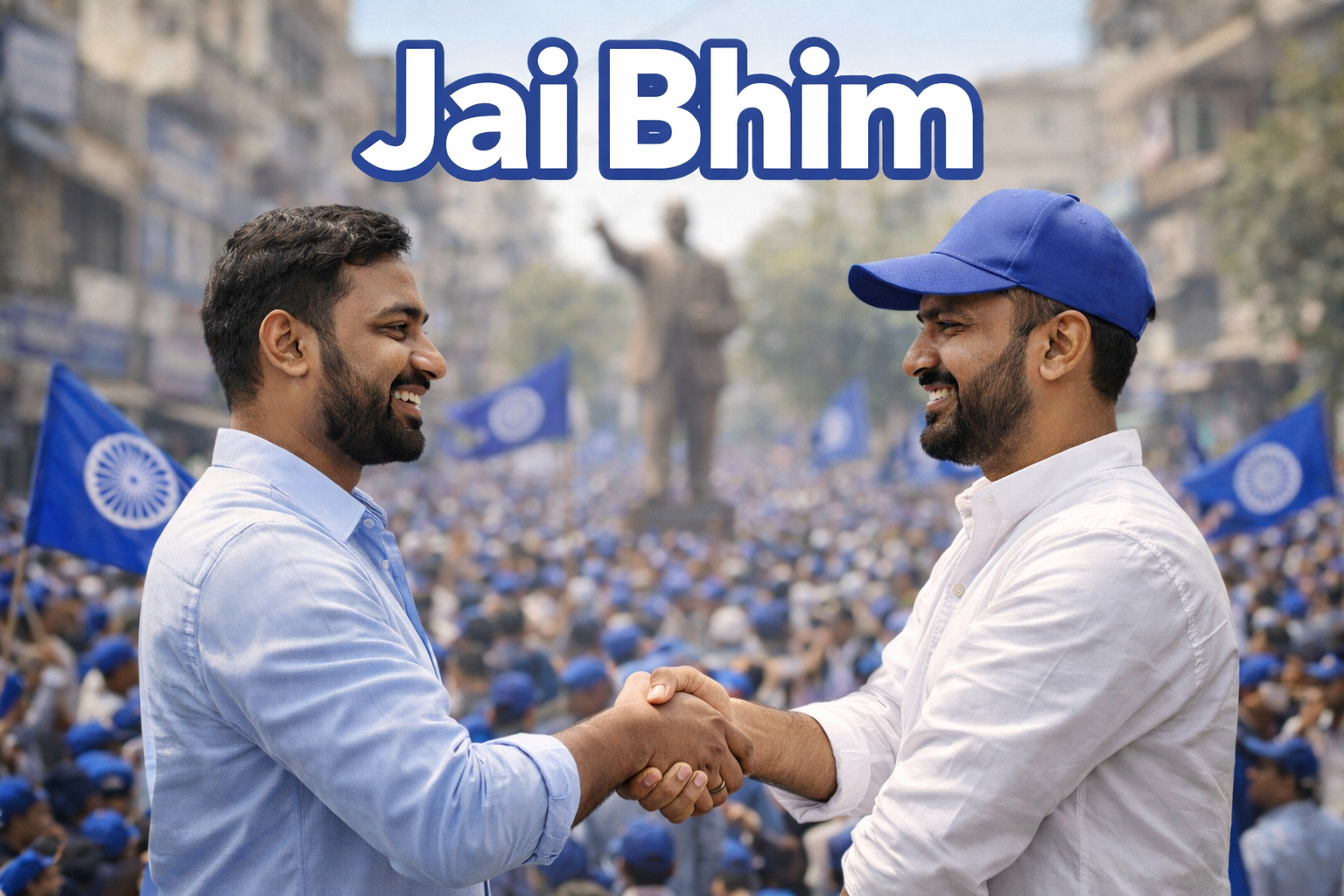
Say them out loud and millions of people across India — in Maharashtra, Tamil Nadu, Uttar Pradesh, Punjab, and beyond — immediately know exactly what you stand for.
These two words carry the weight of an entire movement. They are a greeting, a slogan, a political identity, a cultural declaration, and a statement of human dignity — all at once.
But what do they actually mean? Where did they come from? And why do some people get attacked simply for saying them?
This article answers all of that — completely, honestly, and in simple language. What actually, Jai Bhim meaning
Jai Bhim translates to “Victory for Bhim,” “Long live Bhim,” or “Hail Bhim” in English.
The word “Jai” comes from Sanskrit. It means victory, long live, or glory to. You hear it in phrases like “Jai Hind” (Victory to India) and “Jai Mata Di” (Glory to the Mother Goddess).
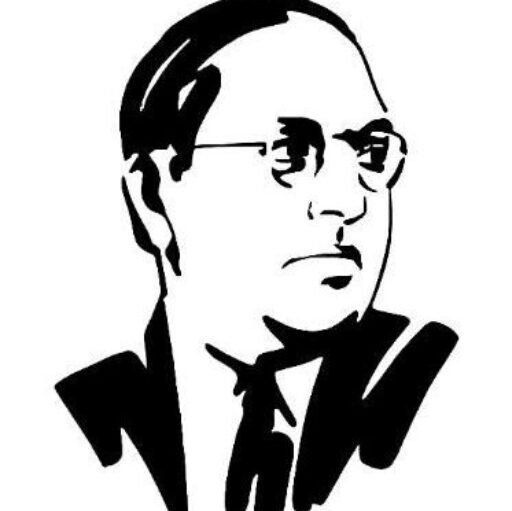
The word “Bhim” refers to Dr. Bhimrao Ramji Ambedkar — his given first name was Bhimrao, and his followers shortened it affectionately to Bhim.
So the literal meaning is: Victory to Bhimrao Ambedkar.
But the literal meaning is only the surface. The real meaning goes much deeper.
2. The Deeper Meaning — What You Are Really Saying
When people say “Jai Bhim,” they mean: “Long live the legacy and inspiration of Dr. B.R. Ambedkar” — a declaration of victory, dignity, humanity, revolution, progress, liberty, equality, fraternity, wisdom, compassion, morality, faith, inspiration, gratitude, enlightenment, integrity, strength, and justice.
That is not an exaggeration. Every one of those words is packed into those two syllables for millions of people.
What they mean by that slogan is that the noble ideal of Babasaheb’s life — the indomitable spirit which enabled the greatest humanitarian to work for the human society, to reclaim their lost rights, and to make the extreme sacrifice for annihilating castes in order to build the nation on the edifice based on liberty, equality, fraternity and social justice for all — that same unfailing endurance, commitment, wisdom, and undaunting courage — that is what they carry in those two words.
In short: when a Dalit person says “Jai Bhim” to another Dalit person, they are saying: I see you. I know your struggle. I share your history. We stand for the same things. And we are not giving up.
When people say “Jai Bhim,” they are not just saying a slogan — they are expressing respect, gratitude, and solidarity with Dr. Ambedkar’s vision of equality, justice, and human rights. It is a way of saying: “We stand with Ambedkar’s ideals, and we are proud of his legacy.”
3. Who Coined Jai Bhim? — The Real Story
Most people think Dr. Ambedkar himself gave this slogan. He did not.
In 1935, a 30-year-old Dalit leader, Babu Hardas Laxmanrao Nagrale, first coined the term “Jai Bhim.” Ambedkar’s close confidant, Hardas, a general secretary of the Scheduled Castes Federation and a legislator from Nagpur, wanted to create a unique salutation for Dalits.
Babu Haridas L.N. was the pioneer of the practice of exchanging the greeting “Jai Bhim,” and he was the real originator of the word “Jai Bhim” in 1935. He was also one of the signatories to the Poona Pact.
Babu Hardas was one of Ambedkar’s most trusted lieutenants. He was brilliant, courageous, and deeply committed. At a young age of 17, Babu Hardas founded a weekly publication titled Maharatha, with a view to spreading social awareness among untouchables. He organised night schools, fought against idol worship, and tried organising the Mahar community by founding the Mahar Samaj organisation.
He was 35 years old when he coined the phrase that would outlive both him and Ambedkar. Tragically, Babu Hardas died in 1939 — just four years after creating the slogan that would go on to echo in the Indian Parliament eight decades later.
4. How Did Babu Hardas Create “Jai Bhim”?
How “Jai Bhim” originated is narrated by P.T. Ramteke in his research paper titled “Jai Bhim” che janak — Baboo Hardas L. N. (published January 2000), which was his M.A. dissertation. He describes how Hardas conceived and developed the idea.
At that time, Dalits used greetings like Jai Johar, Jai Ramapati, Ram Ram, and Namaskar. However, Hardas sought a universal slogan embodying self-respect, brotherhood, and loyalty to Ambedkar and his ideologies — a greeting that could be used with pride, without subservience.
Hardas was not comfortable with “Jai Rama-pati,” — with which he was greeted after being elected as a Legislator. A Moulavi explained to him the meaning of “Salam Alaikum,” a greeting among Muslims. From this, he got the idea of “Jai Bhim.”
He thought: Muslims greet each other with “Peace be upon you.” Hindus greet each other with “Ram Ram” or “Jai Gopal.” Why should Dalit people not have their own greeting — one that expresses their own identity, their own leader, their own pride?
He decided that “Jai Bhim” should be used and responded with “Bal Bhim.” He propagated this method of greeting with the help of workers of “Bhim Vijay Sangh.” Later, he decided that “Bal Bhim” was not suitable and decided that both parties should greet each other with “Jai Bhim.”
He envisioned and coined the “Jai Bhim” greeting. Little did Babu Hardas realise that his greeting would become a universally accepted slogan across India. Soon, the Jai Bhim greeting spread like wildfire across the country.
5. When Was Jai Bhim First Used Publicly?
There are two key public moments in the early history of “Jai Bhim”:
First Public Use — 1938, Makranpur: The slogan was first raised at the Makranpur Parishad, a conference organised at Makranpur village in Kannad tehsil of today’s Chhatrapati Sambhajinagar district in Maharashtra. In 1938, Bhausaheb More, an activist of the Ambedkarite movement, held a meeting in Makranpur in Kannad taluka of Aurangabad district. Dr. Babasaheb Ambedkar was also present. More told the people that, from now on, they should use only “Jai Bhim” to greet each other.
This was the moment it became official — publicly proclaimed in front of Ambedkar himself.
First Time in Front of Ambedkar — 1946, Old Delhi: In 1946, during birthday celebrations for Dr. Bhimrao Ambedkar, for the first time in the presence of Dr. Ambedkar, Jai Bhim was proclaimed by Dalit Poet Bihari Lal Harit (1913–1999) through a poem in Gandhi Ground, opposite Old Delhi Railway Station.
What did Ambedkar do when someone said “Jai Bhim” directly to him? Some people would say “Jai Bhim” to Ambedkar, who would simply smile in response.
He did not object. He did not encourage it loudly. He just smiled. That smile was enough.
6. Could Jai Bhim Be Older Than Ambedkar?
This is one of the most fascinating questions in the entire history of the slogan.
Its origin is obscure and may date as far back as 1818, well before Ambedkar’s birth.
Vivek Kumar, Professor at JNU Delhi, said: “The first time, when Jai Bhim was uttered, it was used as a ‘War Cry’ during the famous Battle of Bhima Koregaon on January 1, 1818.” He further stated that during the war, when the Mahar sepoys (as part of the British East India Company) used to cross the Bhima River, they shouted “Jai Bhim” to galvanise themselves.
If this is true — and historians debate it — then “Jai Bhim” was a war cry used by Mahar soldiers nearly 75 years before Bhimrao Ambedkar was born. The word “Bhim” in that context may have referred to the Bhima River itself — a powerful, roaring river that the soldiers crossed before battle.
What we know for certain is this: when Babu Hardas chose “Jai Bhim” as the Dalit greeting in 1935, he was — consciously or unconsciously — connecting it to a long history of Mahar pride, strength, and resistance.
7. How Did Jai Bhim Spread Across India?
The Jai Bhim slogan became even more popular among Dalits after Ambedkar’s death in 1956. Dalit political parties used it not only as a greeting but also to energise people during rallies, starting and ending their speeches with it.
The spread happened in waves:
1956–1970s — Through Buddhist Conversion: After Ambedkar’s mass conversion at Deekshabhoomi, Nagpur, hundreds of thousands of Dalit Buddhists adopted “Jai Bhim” alongside “Namo Buddhay” as their primary greeting and rally cry.
1970s — Dalit Panthers: The slogan survived through Dalit Ambedkarite movements such as the Dalit Panther revolutionary movement founded in the 1970s to fight caste oppression, and through songs and poems.
1980s–1990s — Kanshiram and BSP: Kanshiram started his own social movement and formed BAMCEF (Backward and Minority Communities Employees Federation), uniting government servants who benefited from the reservation policy. Mayawati’s rise in the 1990s showcased Dalit assertive political leadership for the first time in India. As BAMCEF and BSP spread across northern India, the Jai Bhim slogan regained its significance.
2010s–Present — Resistance Slogan: Rajiv Yadav, a social activist, observes that “Jai Bhim” gained traction in recent years, especially after the Dalit protests against repression since 2014. It became a symbol of resistance in movements such as the institutional murder of Rohit Vemula, the Una Movement, and protests against the nullification of the SC/ST Act by the Supreme Court.
8. Jai Bhim in Parliament — A Historic Moment
For most of its history, “Jai Bhim” was a slogan associated with marginalised communities. Then came a moment that shocked India.
On June 24, in an unprecedented event, the Jai Bhim slogan echoed within the chambers of the new Parliament as new members were taking their oath. Nearly two dozen Members of Parliament — Dalits, Muslims, OBC, and Tribals from Congress, Samajwadi Party, and other parties — concluded their oath-taking ceremony with “Jai Bhim” and “Jai Samvidhan,” holding a copy of the Constitution in their hands.
Jai Bhim has evolved from being a Dalit greeting to a slogan against oppression, becoming as ubiquitous as Ambedkar’s image.
It had taken 89 years from Babu Hardas coining the phrase in 1935 to those words ringing through the halls of Parliament in 2024.
9. Jai Bhim vs Jai Hind — What Is the Difference?
Some historians have mistakenly claimed that “Jai Bhim” was styled after “Jai Hind” — the nationalist slogan.
This is historically wrong. The slogan “Jai Hind” was given by Netaji Subhash Chandra Bose after the formation of the Indian National Army in Burma — just before the end of the Second World War in 1945. “Jai Bhim” was coined by Babu Hardas in 1935 and was in open public use at Makranpur in 1938 — years before “Jai Hind” was first used.
Jai Bhim
Jai Hind
Meaning
Victory to Bhimrao Ambedkar
Victory to India
Coined by
Babu Hardas Laxmanrao Nagrale
Netaji Subhash Chandra Bose
Year
1935
~1943-45
Community
Dalit / Ambedkarite movement
Indian nationalist movement
Purpose
Community identity, dignity, solidarity
National unity, anti-colonial resistance
Both slogans stand for something powerful. But “Jai Bhim” came first — and its roots go deeper into the lived struggle of a specific community fighting for their right to exist as full human beings.
10. Why Saying “Jai Bhim” Still Takes Courage
This is a fact that must not be buried.
For uttering “Jai Bhim” or having an “Ambedkar song” ringtone on mobiles, Dalits have been murdered. There must be something in “Jai Bhim” that makes the so-called upper castes uncomfortable.
Dalits being assaulted and killed for saying “Jai Bhim” has been a tragic reality in 21st-century India.
Why would two words cause this reaction? Because “Jai Bhim” is not a neutral phrase. It is a declaration of equality. It is a person saying: I am not lesser than you. I stand with the man who proved that. And I am not afraid to say his name.
To some people — the ones who benefit from inequality — that declaration is a threat.
Which is exactly why it must keep being said.
11. Frequently Asked Questions
What does Jai Bhim mean?
Jai Bhim means “Victory to Bhim” — where “Jai” means victory or long live, and “Bhim” refers to Dr. Bhimrao Ramji Ambedkar, the Father of the Indian Constitution. More deeply, saying “Jai Bhim” means you stand for Ambedkar’s values of liberty, equality, fraternity, and social justice. It is a greeting, a slogan, a political identity, and a declaration of human dignity used by millions of Dalit, OBC, and Ambedkarite communities across India.
Who started the Jai Bhim slogan?
The Jai Bhim slogan was coined in 1935 by Babu Hardas Laxmanrao Nagrale, a 30-year-old Dalit leader, general secretary of the Scheduled Castes Federation, and one of Ambedkar’s closest confidants. He wanted to create a unique greeting for the Dalit community that expressed self-respect, brotherhood, and loyalty to Ambedkar’s vision — similar to how Muslims greet each other with “Salaam Alaikum.” He is considered the “father of Jai Bhim.”
Why do people say Jai Bhim?
People say Jai Bhim to express solidarity with Dr. Ambedkar’s vision of equality, justice, and human rights. It is used as a greeting between Ambedkarite Buddhists and Dalits, as a rallying cry at political events and protests, and as a statement of cultural identity. After Ambedkar’s death in 1956, it became increasingly popular as a symbol of Dalit political assertion. Today, it is used by people of all communities who stand against caste oppression.
What does Jai Bhim Jai Bharat mean?
“Jai Bhim Jai Bharat” means “Victory to Bhimrao Ambedkar and Victory to India.” It combines the Ambedkarite Dalit rights slogan with the nationalist slogan. Political leaders like Kanshiram, Mayawati, and others popularised this combined form. It expresses the idea that true national progress (Jai Bharat) is only possible when the vision of equality that Ambedkar built (Jai Bhim) is fully realised.
Is Jai Bhim the same as saying “Long live Ambedkar”?
Yes — functionally, that is exactly what it means. “Jai” in the sense used here means “long live” or “glory to.” “Bhim” refers to Bhimrao Ambedkar. So “Jai Bhim” = “Long live Ambedkar” or more completely — “Long live Ambedkar’s mission, his Constitution, his values of liberty, equality, and fraternity, and the dignity of every person he fought for.”
Conclusion
Two words. But not simple words.
“Jai Bhim” is not just the deification of Ambedkar — it is a cultural assertion, about dignity and self-respect, foregrounding an alternate cultural narrative that says: people who were told they were nothing have built something extraordinary — and they will keep building.
It began with Babu Hardas, a young man in 1935, watching his community greet each other with borrowed upper-caste phrases. He thought: we deserve our own words. He gave them two.
Those two words have now been spoken from the floors of Parliament, painted on the walls of villages, sung in Tamil films, chanted at protest marches from Mumbai to New York, and whispered by people who still fear what it costs to say them.
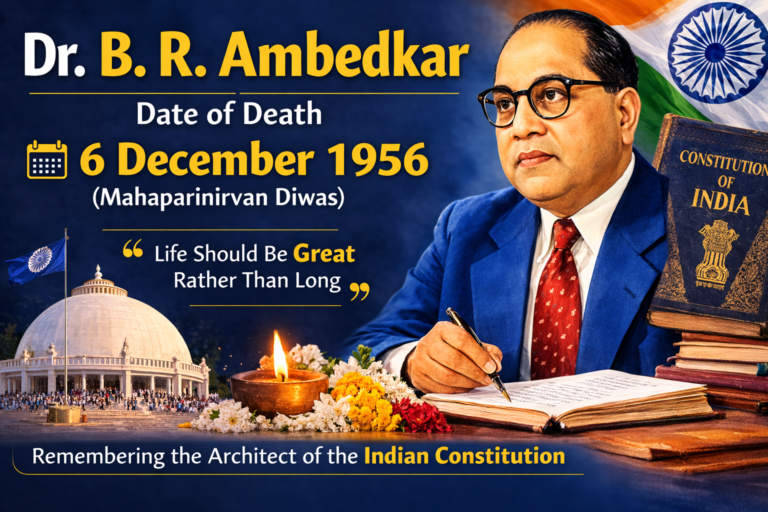
Dr. B.R. Ambedkar died on 6 December 1956. He passed away quietly in his sleep at his home in New Delhi. He was 65 years old. That morning, India woke up to news that changed the country forever. The man who had fought untouchability, written the Indian Constitution, and spent every single day of his…
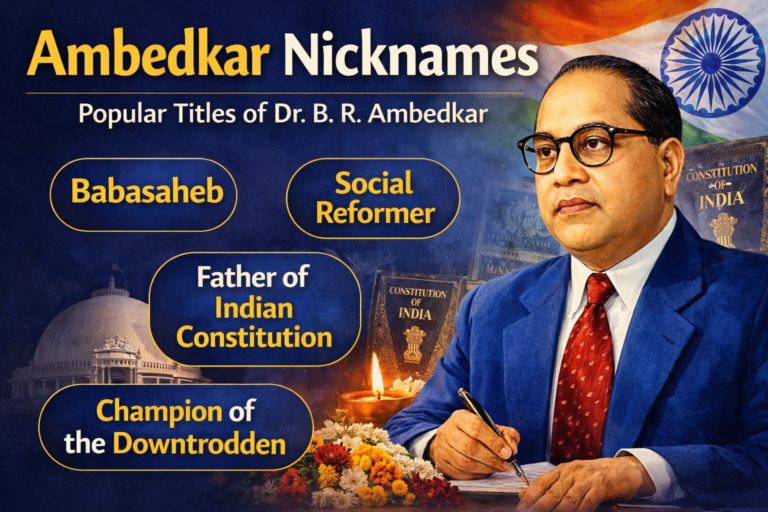
Dr. B. R. Ambedkar is known by many names. But his most popular nickname is Babasaheb. Let us understand what this nickname means and why people lovingly called him by this name. What Was Dr. Ambedkar’s Nickname? The nickname of Dr. Ambedkar was: Babasaheb Even today, millions of people call him Babasaheb Ambedkar. This name…
Dr. B. R. Ambedkar is one of the greatest leaders in Indian history. Many students know him as Babasaheb Ambedkar. But do you know Ambedkar real name? Let us understand clearly in simple language. What Was Ambedkar’s Real Name? The real name of Dr. Ambedkar was: Bhimrao Ramji Sakpal This was his name at birth….
Ambedkar and Buddha Two Giants, One Mission Imagine a man sitting under a tree, seeking peace over 2,500 years ago. Now picture another man, 2,000 years later, reading about him late into the night, finding answers to free millions. The first is Gautama Buddha, born in India. The second is Dr. B.R. Ambedkar, India’s champion…
Dr. Ambedkar date of birth is 14 April 1891. That single date changed India forever. On that morning, in a small military town in central India, a baby boy was born. Nobody around him knew it yet — but that boy would grow up to write the Constitution of the largest democracy on earth. He…
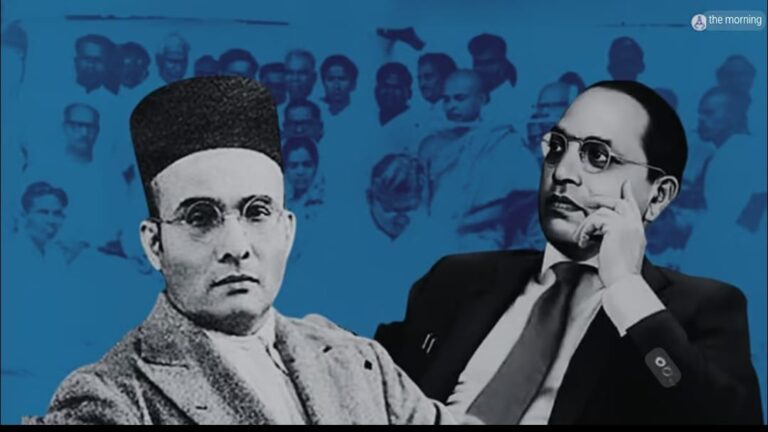
Ambedkar on Savarkar is a fiery topic—a clash of visions for India’s soul. Did they meet? What did Ambedkar say? Did they share a bond or battle? Let’s dive into what Ambedkar said about Savarkar, their Ambedkar letter to Savarkar, and whether Ambedkar met Savarkar, unpacking a debate that still sparks on X. Ambedkar on…