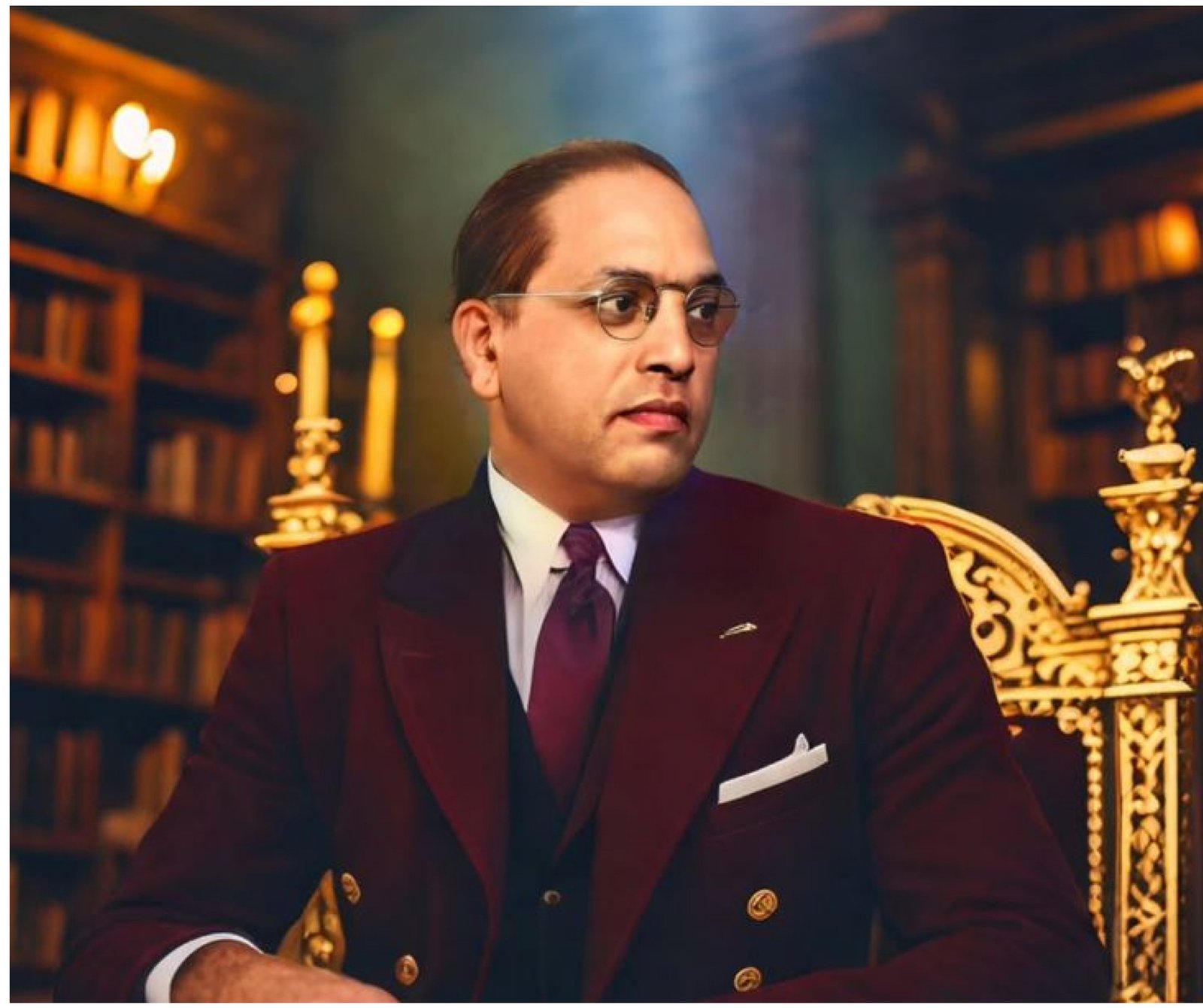
Dr BR Ambedkar Life Story in Simple Language (Biography for Students)
Early Life and Childhood
Dr. BR Ambedkar life story is epic. I am writing it in short for you. he was born on 14 April 1891 in Mhow (now in Madhya Pradesh). His full name was Bhimrao Ramji Ambedkar. He was born into a Mahar family, which was considered an “untouchable” caste at that time.
His father’s name was Ramji Maloji Sakpal. He worked in the British Indian Army. His mother’s name was Bhimabai Sakpal.
Dr. Ambedkar was born in a Mahar family. At that time, people from this community were treated as “untouchable.” This means they were treated unfairly and not allowed to mix with others.
When Bhimrao went to school, he faced many problems. He was made to sit separately from other children. He was not allowed to touch the water pot. Sometimes, teachers ignored him.
These experiences were painful. But instead of giving up, he decided to study hard.
He believed that education was the only way to change society.
Education Journey in India and Abroad
Dr. B. R. Ambedkar loved studying. He believed education could change his life.
He completed his schooling in Mumbai. He studied at Elphinstone High School. At that time, very few students from his community went to school. Passing the matric exam was a big success.
He then joined Elphinstone College. He completed his B.A. degree from Bombay University.
In 1913, he received a scholarship from the Maharaja of Baroda. Because of this help, he went to the United States.
He studied at Columbia University in New York. He learned about economics, politics, and society. He completed his M.A. and later his Ph.D.
Very few Indians, and almost no students from his community, were able to study abroad at that time. This was a great achievement.
After America, he went to London. He studied at the London School of Economics. He also studied law at Gray’s Inn.
He earned a D.Sc. degree and became a lawyer.
Dr. Ambedkar became one of the most educated leaders in India.
He always said that education is the key to freedom.
Struggles Against Untouchability
Even though Dr. B. R. Ambedkar was very intelligent, he faced many problems because of caste.
When he was in school, he was not allowed to sit with other students. He had to sit on a gunny sack that he carried from home. Other children did not talk to him.
He was not allowed to drink water from the common pot. If he felt thirsty, someone from a higher caste had to pour water for him. If no one was there, he had to stay thirsty.
These experiences hurt him deeply.
After finishing his studies abroad, he returned to India. He worked in Baroda for some time. But even there, people refused to rent him a house because of his caste.
He was highly educated. Still, society treated him unfairly.
Instead of becoming silent, he decided to fight injustice through knowledge and law.
He believed that every human being deserves respect.
Role in Making the Indian Constitution
After India became free in 1947, a group of leaders was chosen to write the Constitution of India.
Dr. B. R. Ambedkar was made the Chairman of the Drafting Committee. This was a very important responsibility.
The Constitution is the rule book of the country. It explains how the government should work. It also protects the rights of citizens.
Dr. Ambedkar worked day and night to prepare the final draft. He carefully studied the laws of many countries. He wanted India to become a fair and equal nation.
One of the most important parts of the Constitution is Article 17, which abolished untouchability. This was very meaningful because he had suffered from it in his childhood.
He believed that liberty, equality, and fraternity should be the foundation of India.
The Constitution of India was adopted on 26 November 1949.
Because of his great work, Dr. Ambedkar is known as the “Architect of the Indian Constitution.”
Conversion to Buddhism
Dr. B. R. Ambedkar was born in a Hindu family. But he was not happy with the caste system in Hindu society.
For many years, he studied different religions. He wanted to choose a religion that believed in equality and human dignity.
He said, “I was born a Hindu, but I will not die a Hindu.”
On 14 October 1956, he converted to Buddhism in Nagpur at a place now called Deekshabhoomi. Lakhs of his followers also accepted Buddhism with him.
He believed that Buddhism teaches equality, peace, and compassion. He felt that it gave self-respect to people who were treated unfairly.
After converting, he wrote a book called The Buddha and His Dhamma, which explained his understanding of Buddhism.
His conversion was not only a personal decision. It was also a message that every human being deserves equal respect.
Death and Legacy
Dr. B. R. Ambedkar passed away on 6 December 1956 in Delhi. He was 65 years old.
His death was a great loss for the country. Thousands of people came to pay their respects.
His body was brought to Mumbai and cremated at a place now known as Chaitya Bhoomi. Every year, lakhs of people visit this place to honor him.
But his ideas did not die.
The Constitution he helped write still guides India today. Article 17 ended untouchability in law. Fundamental Rights protect every citizen.
He inspired millions of people to fight for equality through education and peaceful action.
In 1990, he was awarded the Bharat Ratna, India’s highest civilian award.
Today, he is remembered as a great thinker, social reformer, economist, and leader.
His message was simple: Educate, Organize, and work for justice.
Why Students Should Study Ambedkar
Dr. B. R. Ambedkar’s life teaches students many important lessons.
He was born in a poor family. He faced discrimination. Many doors were closed for him. But he did not stop learning.
He studied harder than most people. He earned multiple degrees from top universities in the world. At a time when very few Indians studied abroad, he completed a Ph.D. and a D.Sc.
His success shows that education can change your life.
He also teaches students:
- Never give up.
- Work with discipline.
- Believe in yourself.
- Use knowledge to solve problems.
- Respect all people.
Dr. Ambedkar did not become great because of power or money. He became great because of knowledge.
For students, his life is a reminder that hard work and education can break any barrier.
Frequently Asked Questions
1. When was Dr. B. R. Ambedkar born?
He was born on 14 April 1891 in Mhow, Madhya Pradesh.
2. Where did Dr. Ambedkar study abroad?
He studied at Columbia University in the USA and the London School of Economics in the UK.
3. Why is Dr. Ambedkar called the Architect of the Indian Constitution?
He was the Chairman of the Drafting Committee and played a major role in writing the Constitution.
4. When did Dr. Ambedkar convert to Buddhism?
He converted to Buddhism on 14 October 1956 in Nagpur.
5. When did Dr. Ambedkar die?
He passed away on 6 December 1956 in Delhi.