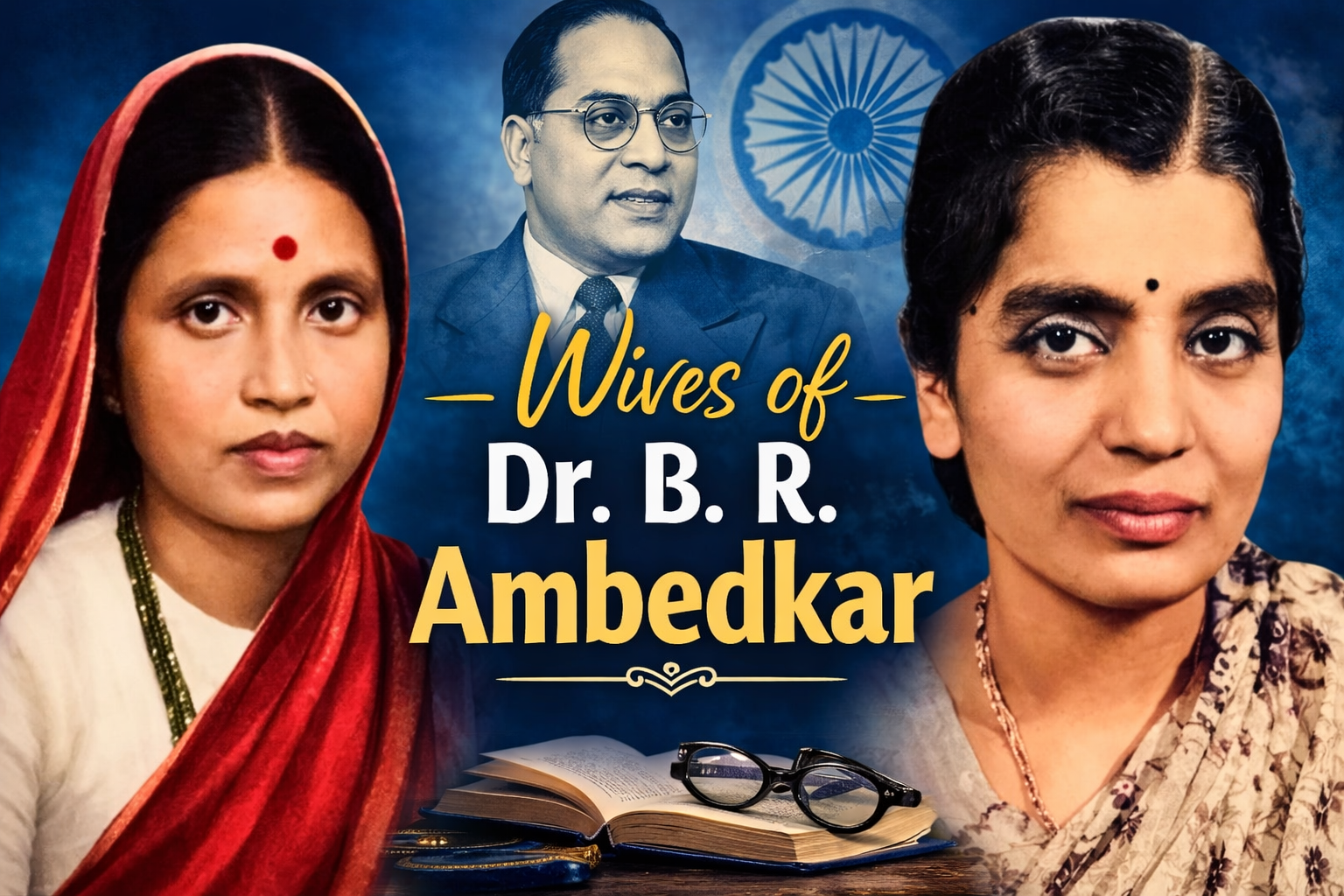
Dr. B.R. Ambedkar had two wives — Ramabai and Savita.
Both women were extraordinary. Both loved him deeply. And both played a role in shaping the man who gave India its Constitution.
Most people know Babasaheb’s public life — the protests, the Constituent Assembly, the Constitution. But very few know the private story. Like about Ambedkar wife The story of two women who stood beside one of history’s greatest leaders through poverty, illness, grief, and revolution.
This article tells you everything — who they were, their caste, why Ambedkar married twice, and the remarkable lives they lived.
2. Who was Ramabai Ambedkar, the first wife of Babasaheb?
Ramabai Ambedkar was born on 7 February 1894 in a village near Dapoli, Ratnagiri, Maharashtra. Her full name was Ramabai Bhimrao Ambedkar. People also called her Ramai — meaning “Mother Rama.”
She came from a poor Dalit family. Her father carried fish baskets from the harbour to the market to earn a living. When both her parents died young, her uncles brought her and her siblings to Bombay (now Mumbai) to live with them in the Byculla area.
On 4 April 1906, young Ramabai married Bhimrao Ambedkar in a simple ceremony at the vegetable market in Byculla, Mumbai. She was just 9 years old. He was 15.
Child marriages were common in India at that time. But what was not common was what this particular marriage would mean for history.
3. What caste did Ramabai Belong To?
Ramabai belonged to the Mahar caste — the same caste as Dr. Ambedkar himself.
The Mahar community was classified as a Scheduled Caste (SC) — one of the communities treated as untouchable under India’s caste system. Both Ramabai and Bhimrao came from the same background of poverty, discrimination, and social exclusion.
This was Ambedkar’s first wife, caste Mahar, a Scheduled Caste. It is the most common answer students look for when searching for “BR Ambedkar’s first wife’s caste.”
4. Ramabai’s Sacrifice — The Untold Story
This is the part of the story that most people never hear. And it needs to be told.
While Dr. Ambedkar was in New York studying at Columbia University and in London studying at the London School of Economics, Ramabai stayed in Mumbai — alone, with young children, with almost no money.
The family was desperately poor. There were many mouths to feed — Ramabai’s siblings, relatives, and her own children. To survive, she and other women of the house walked to Worli every morning to make cowdung cakes for a few coins. She carried heavy loads on her head.
She did all of this without ever complaining to her husband. She deliberately kept the financial struggle hidden from Babasaheb because she did not want him to worry. She wanted him to focus entirely on his studies — on the mission of eliminating caste discrimination from India.
Dr. Ambedkar himself later wrote about this in his publication Bahishkrit Bharat. He admitted that he could not find even half an hour in 24 hours for this deeply devoted and selfless wife.
He called her “Ramu” — lovingly. She called him “Saheb.”
In Thoughts on Pakistan (1941), he dedicated the book to her memory and wrote that she was responsible for transforming “an ordinary Bhima into Dr. Ambedkar.”
She did not write the Constitution. But without her silent sacrifice, there may have been no one to write it.
5. Ramabai’s Death — 27 May 1935
The years of poverty, hunger, and the deaths of four of her five children — all of this destroyed Ramabai’s health.
She became very ill. For the last six months of her life, she was confined to bed. She died on 27 May 1935 at their home, Rajgruha in Dadar, Mumbai. She was just 37 years old.
She had been married to Babasaheb for 29 years.
When Ramabai died, Dr. Ambedkar shut himself in his room and wept through the entire night. The man who had argued with British officials and challenged Mahatma Gandhi completely broke down in grief for the woman who had suffered alongside him from the beginning.
He ensured she was cremated with respect — in her favourite white sari, with full dignity.
After her death, Dr. Ambedkar declared he would never marry again. He kept that promise for 13 years.
6. Why Did Dr. Ambedkar Marry Again?
By the late 1940s, Dr. Ambedkar was deeply unwell.
He was working 16 to 18 hours a day writing the Indian Constitution. He had severe diabetes, high blood pressure, rheumatism, and neuritis. By his early 50s, he could barely walk without support. His eyesight was weakening fast.
His doctors told him he needed someone to care for him — a dedicated person who understood medicine and could manage his health while he worked.
He was initially very reluctant to marry again. In a letter dated 16 March 1948, he wrote that he feared hiring a female nurse might cause a public scandal. But his health kept getting worse, and his friends and well-wishers kept urging him.
That is when Sharada Kabir came into his life.
7. Who Was Dr. Ambedkar’s Second Wife, Savita Ambedkar?
Savita Ambedkar was born Sharada Krishnarao Kabir on 27 January 1909 in Mumbai.
She was a highly educated woman — she completed her MBBS from Grant Medical College, Mumbai in 1937, and went on to become the Chief Medical Officer of a 200-bed hospital in Gujarat.
She met Dr. Ambedkar through a common friend — Dr. S.M. Rao — in Mumbai. Their first conversations were about women’s empowerment and Buddhist philosophy. They wrote 40 to 50 letters to each other over the following year. Ambedkar’s letters to her were 18 to 25 pages long.
On 15 April 1948 — one day after Ambedkar’s 57th birthday — they married in a civil ceremony in New Delhi. She was 39. He was 57.
After marriage, she took the name Savita, which Ambedkar chose for her. It means “as shining as the sun.” He called her “Sharu.” His followers called her “Mai” — mother.
Together they were married for 8 years — until his death on 6 December 1956.
In his final book, The Buddha and His Dhamma, Ambedkar wrote in the preface that Savita had extended his life by 8 to 10 years through her dedicated medical care and companionship. Without her, he may not have lived to see the Constitution come into force, or to convert to Buddhism at Deekshabhoomi.
8. What caste did Savita Ambedkar Belong To?
Savita Ambedkar — born Sharada Kabir — belonged to the Saraswat Brahmin community.
Yes — Dr. Ambedkar, the man who spent his entire life fighting against caste hierarchy, married a Brahmin woman for his second marriage.
This surprised and even angered many people at the time. Some of his followers and family members were upset. But Ambedkar did not see a contradiction.
He had always said that caste must be destroyed — and he believed that inter-caste marriage was one of the most powerful ways to do that. He wrote: “Inter-dining and inter-marriage are the most powerful solvent of caste.”
By marrying Savita, he lived what he preached.
Savita’s own family was progressive. Six of her eight siblings also had inter-caste marriages. Her family said openly, “We did not oppose inter-caste marriages because our whole family was educated.”
The short answer for students searching “BR Ambedkar’s second wife caste” — Savita Ambedkar’s caste was Saraswat Brahmin.
9. Savita Ambedkar’s Life After Babasaheb
After Dr. Ambedkar died on 6 December 1956, Savita faced a terrible storm.
Some people falsely blamed her for his death. There were ugly rumours. Some followers separated her from the Ambedkarite movement. Prime Minister Jawaharlal Nehru formed a committee to investigate, and the committee cleared her completely of any wrongdoing.
But Savita did not run away from his legacy. She kept fighting for it.
She spoke at dozens of public conferences about Dalit rights and the Buddhist movement. She helped set up the Symbiosis Society’s Dr. Babasaheb Ambedkar Museum in Pune in 1996, which houses Ambedkar’s books, his violin, his iconic spectacles, and his Bharat Ratna medal.
Dalit Panthers activists treated her with great love and respect, calling her “Mai.”
She lived a long life of dignity and service. Savita Ambedkar died on 29 May 2003 at J.J. Hospital, Mumbai. She was 94 years old.
Prime Minister Atal Bihari Vajpayee called her Ambedkar’s “principal source of inspiration” and described her as “a great social worker in her own right.”
10. Frequently Asked Questions
Who was Dr. Ambedkar’s second wife?
Dr. Ambedkar’s second wife was Savita Ambedkar, born Sharada Krishnarao Kabir. She was a qualified doctor with an MBBS degree. They married on 15 April 1948. She belonged to the Saraswat Brahmin community. She cared for Dr. Ambedkar’s declining health during his final years and outlived him by 47 years, dying on 29 May 2003.
Who is Dr. Bhimrao Ambedkar’s wife?
Dr. Bhimrao Ambedkar had two wives. His first wife was Ramabai Ambedkar (also called Ramai), whom he married in 1906 and who died in 1935. His second wife was Savita Ambedkar (born Sharada Kabir), whom he married in 1948 and who cared for him until his death in 1956.
Which caste did Dr. Ambedkar’s wife belong to?
Dr. Ambedkar’s first wife Ramabai, belonged to the Mahar caste — a Scheduled Caste, the same as Ambedkar himself. His second wife, Savita (Sharada Kabir) belonged to the Saraswat Brahmin community. Ambedkar’s inter-caste second marriage was a powerful personal statement against the caste system he fought to destroy.
Who was Savita Ambedkar married to?
Savita Ambedkar was married to Dr. B.R. Ambedkar, the chief architect of the Indian Constitution and India’s first Law Minister. They married on 15 April 1948, one day after Ambedkar’s 57th birthday. She was 39 at the time. They were together for 8 years until his death on 6 December 1956.
Why did Dr. Ambedkar marry twice?
Dr. Ambedkar’s first wife, Ramabai, died on 27 May 1935 after a long illness. He did not remarry for 13 years. He married again in 1948 primarily because of his severely declining health. He needed a dedicated caregiver, and Sharada Kabir — a qualified doctor — became both his caregiver and companion. He married her on 15 April 1948.
Conclusion
Behind every great man, there are people whose sacrifice made his greatness possible.
Ramabai carried poverty, hunger, and grief — quietly, without complaint — so that her husband could study, travel, and fight for millions of people who had never met her.
Savita gave up a successful medical career, stood beside a sick and ageing man, and kept him alive long enough to finish writing the Constitution and convert to Buddhism.
Neither of them sought the spotlight. Both of them deserved it.
Dr. Ambedkar once said: “I measure the progress of a community by the degree of progress which women have achieved.”
The women in his own life proved that quote every single day.
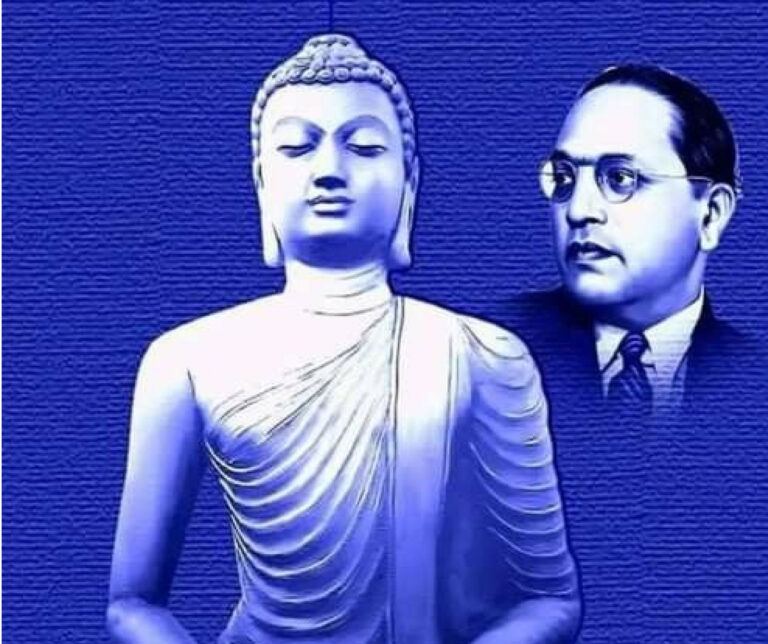
Ambedkar and Buddha Two Giants, One Mission Imagine a man sitting under a tree, seeking peace over 2,500 years ago. Now picture another man, 2,000 years later, reading about him late into the night, finding answers to free millions. The first is Gautama Buddha, born in India. The second is Dr. B.R. Ambedkar, India’s champion…
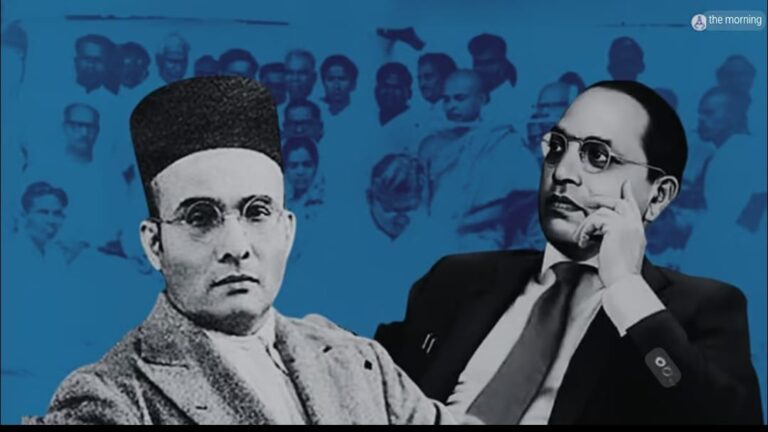
Ambedkar on Savarkar is a fiery topic—a clash of visions for India’s soul. Did they meet? What did Ambedkar say? Did they share a bond or battle? Let’s dive into what Ambedkar said about Savarkar, their Ambedkar letter to Savarkar, and whether Ambedkar met Savarkar, unpacking a debate that still sparks on X. Ambedkar on…
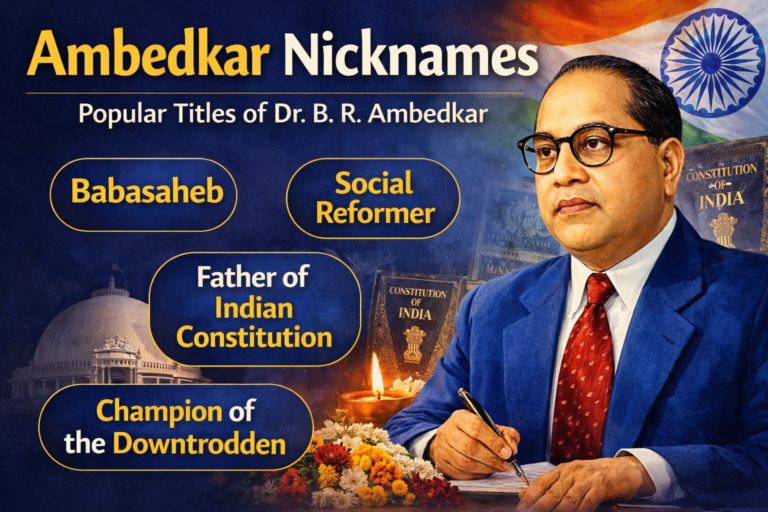
Dr. B. R. Ambedkar is known by many names. But his most popular nickname is Babasaheb. Let us understand what this nickname means and why people lovingly called him by this name. What Was Dr. Ambedkar’s Nickname? The nickname of Dr. Ambedkar was: Babasaheb Even today, millions of people call him Babasaheb Ambedkar. This name…
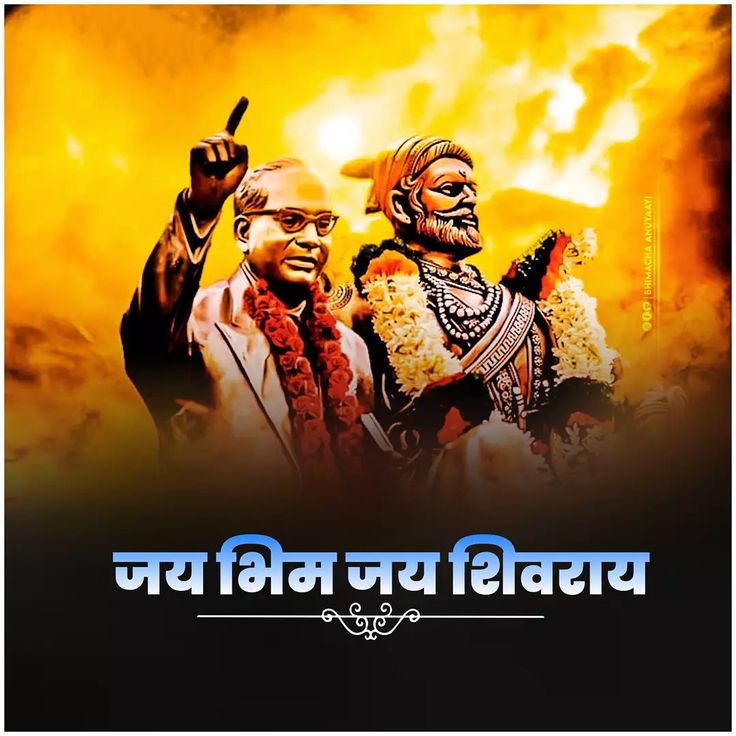
Why Talk About Ambedkar and Shivaji Maharaj Together? When we think of the most powerful and inspiring leaders in Indian history, two names shine bright—Dr. Babasaheb Ambedkar and Chhatrapati Shivaji Maharaj. Though they lived in different times—Shivaji Maharaj in the 1600s and Dr. Ambedkar in the 1900s—they both stood for justice, equality, and freedom. Their…
What happens when a monk meets a revolutionary? At first glance, Buddha and Karl Marx seem like polar opposites—one a serene spiritual teacher, the other a firebrand revolutionary. Buddha sought liberation from suffering through inner peace; Marx fought for liberation from oppression through systemic change. Yet both were radical thinkers who challenged the status quo,…
Carrying the Jay Bhim Torch Who is Prakash Ambedkar? A present Voice for Justice and Equality Prakash Ambedkar is an Indian politician, lawyer, and social activist. He is the grandson of Dr. B.R. Ambedkar, the architect of the Indian Constitution and a great leader who fought for the rights of Dalits and other marginalized communities….