Two great men. One shared goal. Completely opposite roads to get there.
Dr. B.R. Ambedkar and Mahatma Gandhi are the two most powerful figures in modern Indian history. Both wanted to end poverty and suffering. Both hated untouchability. Both gave their entire lives to India.
But they disagreed — fundamentally, fiercely, and publicly — on almost everything else.
Ambedkar vs Gandhi debate was not just a clash of personalities. It was a clash of two completely different visions for what a free India should look like. One vision came from a man born into privilege, who looked at the caste system from the outside. The other came from a man who lived inside the caste system’s cruelty from the day he was born.
Understanding this debate is not just good for your UPSC preparation. It is essential for understanding India.
Here is the simplest way to understand the difference between Gandhi and Ambedkar:
Gandhi said: The caste system is bad, but Hinduism is good. We can fix the problem from inside the system through moral reform, self-purification, and spiritual change.
Ambedkar said: The caste system is not an accident. It comes directly from Hindu scriptures. You cannot fix a house whose foundation is rotten. You have to demolish it and build a new one.
Gandhi looked at untouchability as a social evil that deviated from true Hinduism. Ambedkar looked at untouchability as a product of Hinduism itself — built into its texts, its theology, and its hierarchy.
This single difference in diagnosis led to two completely different prescriptions for India’s future.
3. Ambedkar vs Gandhi on Caste — The Biggest Fight
This was the heart of the Ambedkar vs Gandhi debate — and it was personal for both of them.
Gandhi’s position on caste: Gandhi initially supported a reformed version of the Varna system — the four-tier division of society into Brahmin, Kshatriya, Vaishya, and Shudra. He believed this was a reasonable division of labour, not a hierarchy. He wanted to remove untouchability but keep the broad social framework. He called untouchable people “Harijans” — Children of God — as a term of compassion.
He later changed his position and called for the abolition of caste entirely. But he never agreed that Hindu scriptures like the Manusmriti were the source of the problem.
Ambedkar’s position on caste: Ambedkar said the Varna system and the caste system are the same thing — just two names for one oppressive structure. He wrote Annihilation of Caste (1936) to argue that you cannot reform caste — you must destroy it root and branch. He said inter-caste marriage and inter-dining are the only real solvents of caste.
He also objected to the word “Harijan.” He felt it was patronising and disempowering. The word “Children of God” placed Dalits in a position of needing God’s protection, not their own rights. He wanted Dalits to be seen as citizens with rights, not as objects of charity.
Their 1936 exchange of letters about Annihilation of Caste remains one of the most important intellectual debates in Indian history.
4. Which Decision of Gandhi Did Ambedkar Oppose? — The Communal Award
The most explosive confrontation between the two men happened in 1932, and it is a story every student must know.
At the Round Table Conferences in London (1930–32), Ambedkar fought to get separate electorates for Dalits — meaning Dalits would elect their own representatives in a separate voting process, completely independent of upper-caste influence.
The British government agreed. In August 1932, the Communal Award gave separate electorates to Dalits, Muslims, Sikhs, Christians, and Anglo-Indians.
Gandhi was in jail at Yerwada Prison in Pune at the time. When he heard about separate electorates for Dalits, he announced a fast unto death to oppose it. He argued that giving Dalits a separate electorate would permanently divide Hindu society and weaken the national movement.
This was the decision of Gandhi that Ambedkar most strongly opposed.
Ambedkar was furious. He believed Gandhi was essentially using his own life as a hostage to take away a right that Dalits had just won. He wrote: “Gandhi had no right to fast against the political rights of another community.”
But Ambedkar was trapped. If Gandhi died, millions of upper-caste Hindus would blame the Dalit community for his death. The backlash could mean violence against Dalits across India.
After six days of negotiations, on 25 September 1932, Ambedkar and Gandhi signed the Poona Pact.
5. The Poona Pact — What Happened and Why It Still Matters
The Poona Pact is the most studied moment in the Ambedkar and Gandhi relationship.
Under its terms:
Separate electorates for Dalits were dropped
Reserved seats for Dalits in provincial legislatures were dramatically increased — from 71 to 148
A certain portion of seats in the general electorate was reserved exclusively for SC candidates
Ambedkar signed it. But he never forgave the circumstances that forced him to sign it. He later wrote that the Poona Pact was a “settlement by coercion” — that Gandhi used his fast as a weapon to override a legitimate political demand.
The Poona Pact’s reserved seats model became the foundation of the SC/ST reservation in elections that exists in India today. You can trace every reserved constituency in Indian politics directly back to this 1932 agreement.
6. Difference Between Gandhi and Ambedkar on Religion
Their views on religion were equally different:
Gandhi was a devout Hindu. He believed politics and religion cannot be separated. For him, India’s independence movement drew its moral strength from Hindu spiritual values. He read from the Gita every day. He believed God and Truth were the same thing.
Ambedkar believed in the complete separation of state and religion. He argued that mixing religion and politics was dangerous — especially in a country with a caste-based religion. He eventually left Hinduism entirely, converting to Buddhism on 14 October 1956 along with approximately 600,000 followers.
On Manusmriti — the ancient text that codified caste hierarchy — Gandhi said it had good parts mixed with bad. Ambedkar publicly burned the Manusmriti at the Mahad Satyagraha in 1927. He saw it as the source code of caste oppression.
7. Difference Between Gandhi and Ambedkar on Democracy
This is the most important section for Ambedkar vs Gandhi UPSC answers.
Topic
Gandhi
Ambedkar
Democracy
Skeptical of Western parliamentary democracy
Strong supporter of parliamentary democracy
Villages
Gramraj — village republics as the ideal India
Villages are “dens of casteism” — not the foundation of freedom
Industry
Opposed heavy machinery; supported cottage industries and swadeshi
Supported industrialisation as a tool to end caste-based labour
Constitution
Preferred a constitution suited to India’s traditions
Believed only a strong written Constitution could protect minority rights
Political power
Moral reform first, political change follows
Political rights and legal protection come first — then social change follows
Ambedkar famously said: “Political democracy cannot last unless there lies at the base of it social democracy.” He believed you could not have a functioning democracy if the social structure underneath it was built on caste inequality.
Gandhi believed that social change would come through the moral transformation of individuals. Ambedkar believed it would come through structural change in law and institutions. India’s Constitution — which Ambedkar wrote — reflects his vision, not Gandhi’s.
8. What Ambedkar Said About Gandhi
Ambedkar was direct and often harsh about Gandhi — but also honest.
He criticised Gandhi early in their relationship, once calling Gandhi’s moral politics “hollow and noisy.” He wrote an entire book titled What Congress and Gandhi Have Done to the Untouchables (1945), arguing that Gandhi and the Congress Party consistently sacrificed Dalit interests for Hindu unity.
But Ambedkar was also capable of recognising Gandhi’s greatness. He acknowledged Gandhi’s extraordinary ability to mobilise the Indian masses. He once said Gandhi was “one of the greatest men under the sun,” while also adding that Gandhi was “innocent of political science and principles of sociology.”
After Gandhi was assassinated on 30 January 1948, Ambedkar — despite all their public battles — paid tribute to him. He said Gandhi’s death was a great loss to the country, regardless of their disagreements.
9. Where Gandhi and Ambedkar Agreed
Despite all their differences, these two men shared some important common ground — and it is important to know this for a balanced UPSC answer:
Both opposed communism — Gandhi rejected it for its violence; Ambedkar rejected it for taking shortcuts
Both used non-violent methods — Gandhi’s non-violence was absolute; Ambedkar’s was more strategic, but he never advocated armed revolt
Both wanted to end untouchability — they disagreed on method, never on the goal
Both believed in education — Gandhi and Ambedkar both saw education as central to social transformation
Both opposed British colonial rule — though Ambedkar sometimes worked with the British when it served Dalit rights
Both cared about women’s rights — Gandhi championed women in the freedom movement; Ambedkar wrote the Hindu Code Bill to give women legal equality
10. Ambedkar vs Gandhi — Books to Read
Students searching for gandhi vs ambedkar book or ambedkar vs gandhi book — here are the best reads:
Book
Author
What It Covers
Annihilation of Caste (1936)
Dr. B.R. Ambedkar
Ambedkar’s most powerful attack on the caste system
What Congress and Gandhi Have Done to the Untouchables (1945)
Dr. B.R. Ambedkar
Ambedkar’s direct critique of Gandhi’s politics
Gandhi and Ambedkar (1997)
A. Krishnaswamy
Balanced comparative biography
The Ambedkar-Gandhi Debate
Bindu Puri
Academic analysis of their ideological clash
Babasaheb: The Untold Story of Dr. B.R. Ambedkar
Aakash Singh Rathore
Modern retelling of Ambedkar’s life and debates
11. Frequently Asked Questions
What is the main difference between Gandhi and Ambedkar?
The main difference between Gandhi and Ambedkar was in their approach to the caste system. Gandhi believed the caste system could be reformed from within Hinduism through moral persuasion and spiritual change. Ambedkar believed the caste system was rooted in Hindu scriptures and had to be completely annihilated — not reformed. Gandhi favored decentralized village democracy; Ambedkar supported parliamentary democracy with strong constitutional protections for minorities.
Which decision of Gandhi did Ambedkar oppose?
Ambedkar most strongly opposed Gandhi’s fast unto death in 1932 against the Communal Award, which had granted Dalits separate electorates. Gandhi went on hunger strike from Yerwada Prison to pressure Ambedkar into dropping the demand for separate electorates. Under duress, Ambedkar signed the Poona Pact on 25 September 1932, giving up separate electorates in exchange for significantly increased reserved seats in legislatures.
What did Ambedkar say about Gandhi?
Ambedkar had mixed views about Gandhi. He wrote a whole book criticising Gandhi’s policies — What Congress and Gandhi Have Done to the Untouchables (1945). He called Gandhi’s moral politics “hollow and noisy” at times. But he also called Gandhi “one of the greatest men under the sun” while noting he was “innocent of political science.” After Gandhi’s assassination in 1948, Ambedkar paid tribute to him as a great national figure despite their many public disagreements.
What was the Poona Pact between Ambedkar and Gandhi?
The Poona Pact was an agreement signed on 25 September 1932 between Dr. B.R. Ambedkar and Mahatma Gandhi. Under the pact, Ambedkar agreed to give up the demand for separate electorates for Dalits, which Gandhi was fasting unto death to oppose. In exchange, the number of reserved seats for Scheduled Caste communities in provincial legislatures was more than doubled — from 71 to 148. The pact became the legal basis for SC electoral reservation in India today.
Was Gandhi wrong about caste compared to Ambedkar?
This is debated by historians and scholars. Ambedkar’s position — that caste must be fully annihilated, not reformed — has been validated by India’s continued caste-based inequality even decades after independence. The constitutional framework Ambedkar built has done more for Dalit rights than any moral reform campaign. However, Gandhi’s contribution to mass mobilisation and national unity was also enormous. Both legacies remain relevant. The debate continues.
Conclusion
Gandhi and Ambedkar were never really enemies — even when they were opponents.
They were two brilliant men who looked at the same problem — the suffering of India’s poorest and most marginalised people — and reached different conclusions about how to solve it.
Gandhi saw the solution through moral and spiritual transformation. Ambedkar saw the solution through legal rights, political power, and constitutional protection.
History has shown that India needed both — Gandhi’s mass movement to win independence, and Ambedkar’s Constitution to make that independence meaningful for every citizen.
But if you ask whose vision protects you today — whose work gives you reservations in college, abolishes untouchability by law, and guarantees your right to equality — the answer is written on every page of the Indian Constitution.
Dr. B.R. Ambedkar’s biography is the story of the most extraordinary man India has ever produced. A boy who was not allowed to drink water in school grew up to write the law of the largest democracy on earth. His full name was Bhimrao Ramji Ambedkar — but millions of people across India call him…
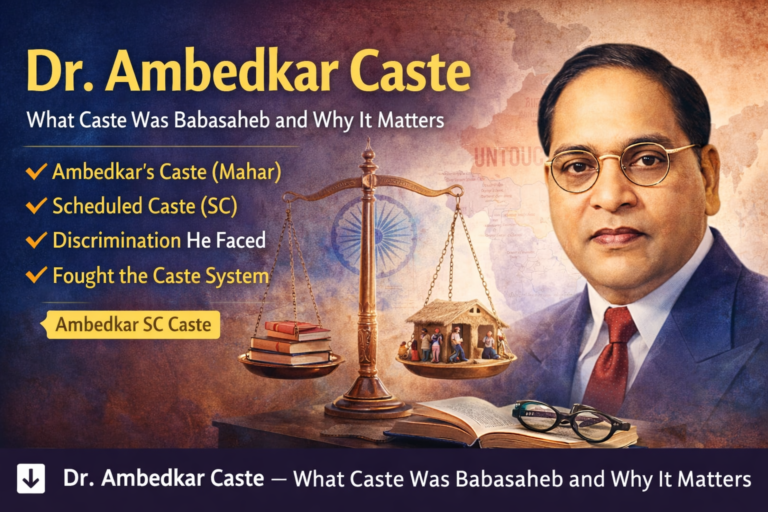
Dr. B.R. Ambedkar was born into the Mahar caste — one of the communities classified as Scheduled Caste (SC) under the Indian Constitution. The Mahar community was treated as untouchable in Indian society for centuries. They were forced to live outside village boundaries. They were not allowed to draw water from public wells. They were…
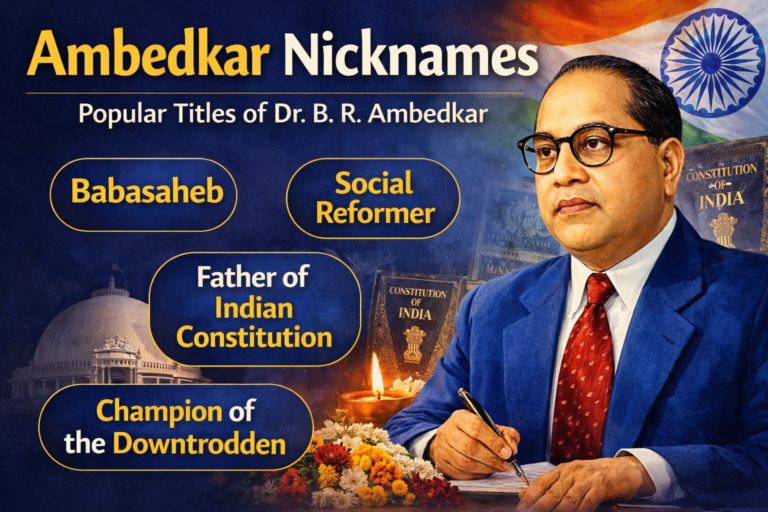
Dr. B. R. Ambedkar is known by many names. But his most popular nickname is Babasaheb. Let us understand what this nickname means and why people lovingly called him by this name. What Was Dr. Ambedkar’s Nickname? The nickname of Dr. Ambedkar was: Babasaheb Even today, millions of people call him Babasaheb Ambedkar. This name…
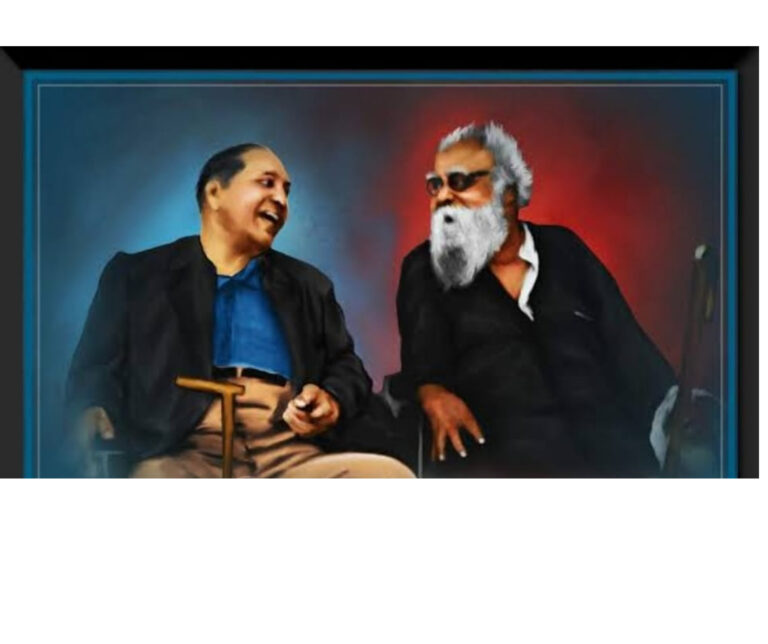
India’s fight against caste oppression and social inequality was led by two towering figures, Periyar and Ambedkar. Though they came from different regions (Tamil Nadu and Maharashtra), their mission was the same: to destroy caste hierarchy and establish a society based on equality, rationality, and self-respect. Periyar, the fiery social reformer from the South, challenged Brahminical dominance…
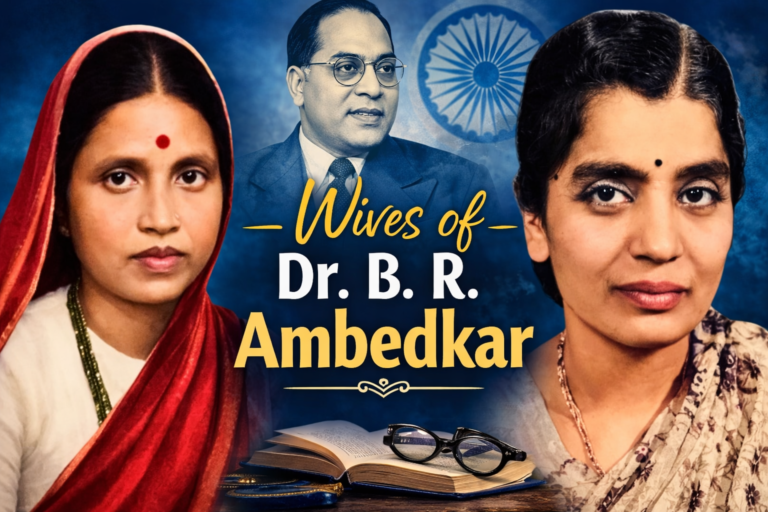
Dr. B.R. Ambedkar had two wives — Ramabai and Savita. Both women were extraordinary. Both loved him deeply. And both played a role in shaping the man who gave India its Constitution. Most people know Babasaheb’s public life — the protests, the Constituent Assembly, the Constitution. But very few know the private story. Like about…
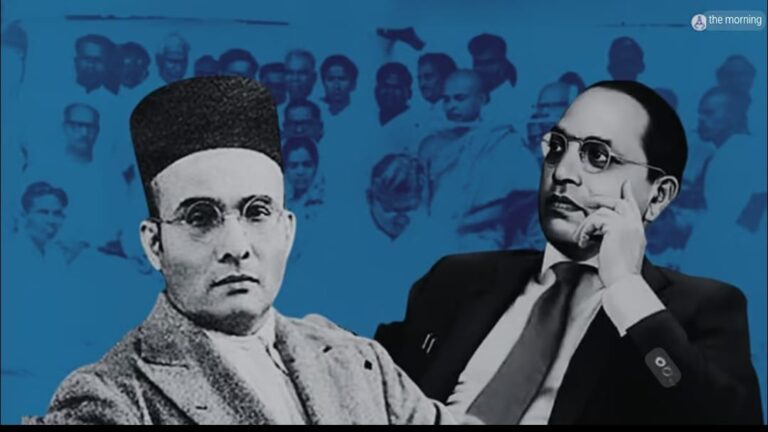
Ambedkar on Savarkar is a fiery topic—a clash of visions for India’s soul. Did they meet? What did Ambedkar say? Did they share a bond or battle? Let’s dive into what Ambedkar said about Savarkar, their Ambedkar letter to Savarkar, and whether Ambedkar met Savarkar, unpacking a debate that still sparks on X. Ambedkar on…