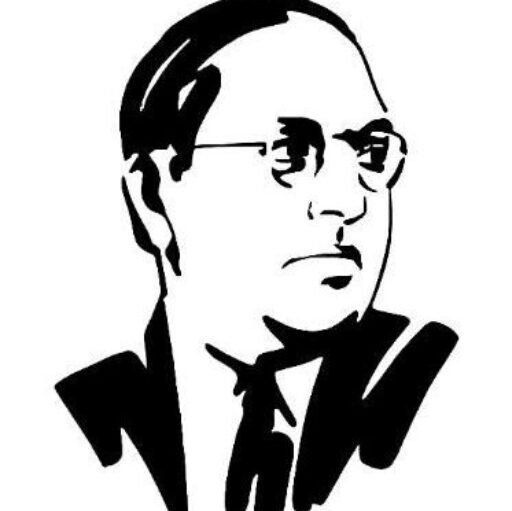

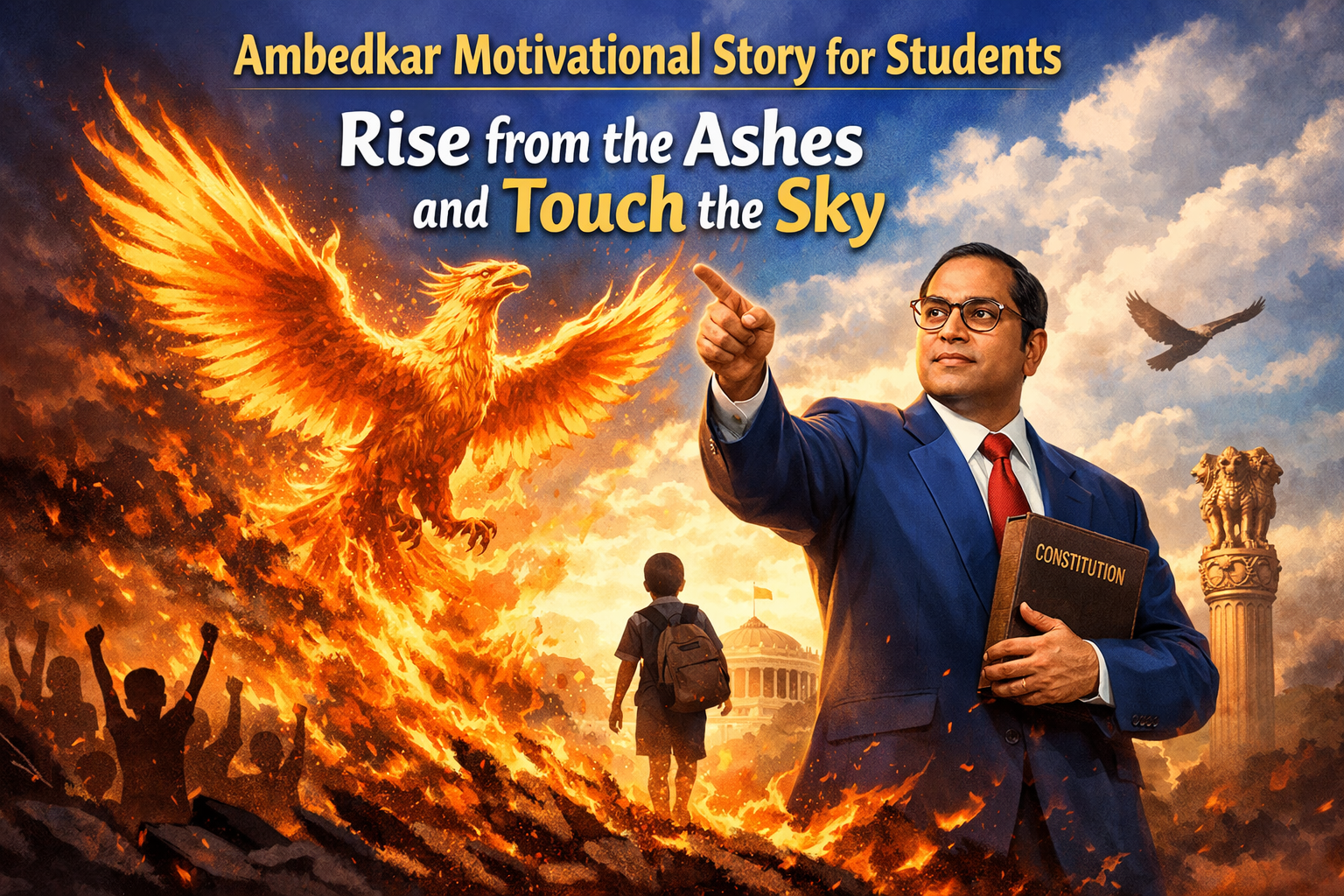
The man who was not allowed to touch a water tap went on to write the Constitution of the world’s largest democracy. If that doesn’t make you believe in yourself, nothing will.
The Boy Nobody Believed In
Imagine going to school and being made to sit outside the classroom. Not because you did something wrong. Not because you were naughty. But simply because of the family you were born into.
Imagine being told — before you even had a chance to speak — that you don’t deserve education, dignity, or dreams.
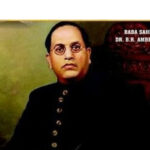
That was the life of a little boy named Bhimrao Ramji Ambedkar.
And yet, that same boy grew up to become one of the greatest scholars the world has ever seen. He earned multiple doctorates. He mastered economics, law, philosophy, and political science. He drafted the Constitution of India. He fought for the rights of millions of people who were crushed under the weight of discrimination.
How? How does a person rise from that kind of darkness?
Ambedkar Motivational Story for Students. We are going to explore today — not just as history, but as a living, breathing lesson for every student who has ever felt small, ignored, or told they cannot succeed.
Where It All Began — The Weight of Being Born “Different”
Dr. B.R. Ambedkar was born on April 14, 1891, in Mhow, a small military town in present-day Madhya Pradesh. He was the 14th child of Ramji Maloji Sakpal, a soldier in the British Indian Army.
His family belonged to the Mahar caste — a community that was labeled as “untouchables” in the cruel hierarchy of the caste system. In those days, untouchables were not just poor. They were considered impure. They were not allowed to drink water from public wells. They could not walk on the same streets as upper-caste people. They could not enter temples. In some places, they had to sweep their own footprints as they walked so that their “shadow” would not pollute the path.
Let that sink in for a moment.
A child was considered a burden to society simply because of his birth.
In schools, teachers would not touch the notebooks of untouchable children. Some teachers would not even call their names in class. Young Bhimrao was made to sit on a gunny sack — a rough piece of cloth — separate from the other students. The school peon would pour water into his hands from a height, never letting the pot touch his “unclean” hands. If the peon was absent, Bhimrao went without water.
This is not ancient mythology. This happened to a real child, barely over 100 years ago.
And still, he came to school. Every single day.
That, dear student, is your first lesson: Show up. No matter what.
The Spark That Refused to Die — His Early Education
Most children in Bhimrao’s position dropped out of school. Society expected them to. The system was designed to break them.
But his father, Ramji, was different. Though he was a soldier of modest means, he understood one thing with absolute clarity: Education is the only weapon that cannot be snatched away from you.
He taught his children to read. He made them study the great epics — the Ramayana and Mahabharata. He pushed them to go to school despite the humiliation.
Young Bhimrao absorbed everything. He had a hunger for knowledge that no amount of discrimination could kill. He loved books. He loved ideas. He would read by lamplight when there was nothing else to do.
There’s a beautiful and telling story from his school days. A teacher named Krishnaji Keshav Ambedkar — a Brahmin teacher — saw something extraordinary in this untouchable boy. He was so impressed by Bhimrao’s intelligence and spirit that he did something unusual: he gave Bhimrao his own surname — Ambedkar.
That name, given by a compassionate teacher, became the name that shook the world.
Think about what a single kind act can do. One teacher saw beyond the caste. One teacher said, “I believe in you.” And the boy who received that belief changed the course of a nation.
Lesson 2: One person who believes in you can change your entire life. And you can be that one person for someone else.
Hunger Stronger Than Hunger — His Obsession with Learning
As Ambedkar grew older, his desire for education only intensified. But so did the obstacles.
When he completed his matriculation in 1907, it was considered a miracle. Very few students from his community had ever reached that milestone. His community celebrated. His father was in tears.
But Ambedkar was just getting started.
He enrolled in Elphinstone College in Bombay, becoming one of the very first students from the untouchable community to attend college. People stared. People whispered. Some were openly hostile. But he sat in those lecture halls, and he studied.
Then came a life-changing opportunity.
The progressive Maharaja of Baroda, Sayajirao Gaekwad III, offered a scholarship for students from marginalized communities to study abroad. Ambedkar won the scholarship and sailed to New York to study at Columbia University — one of the most prestigious universities in the world.
Imagine the journey. A boy from a community not allowed to touch water taps, now walking the halls of Columbia University in America.
At Columbia, something extraordinary happened — nobody cared about his caste.
He was just a student. A brilliant one. He could sit wherever he wanted. He could drink water from any fountain. He could ask questions freely. For the first time in his life, he was treated as a full human being.
This experience transformed him. He later said that his time at Columbia was among the happiest of his life.
He completed his Master’s degree and then his Ph.D. in Economics from Columbia University in 1917, submitting a thesis on “The Evolution of Provincial Finance in British India.” He then went to London to study at the London School of Economics, and later qualified as a barrister from Gray’s Inn.
By the time he returned to India, he had:
- A PhD from Columbia University
- A DSc from the London School of Economics
- A Barrister-at-Law from Gray’s Inn
- Multiple other degrees and diplomas
- Fluency in multiple languages
- A mind sharpened by the world’s finest institutions
And yet, when he returned to India, a landlord refused to rent him a house because of his caste.
The world’s most educated Indian could not find a place to live.
But did he give up? No. He picked up his pen and got back to work.
The Fight That Was Bigger Than One Man — Ambedkar and Social Justice
Here is something that separates Dr. Ambedkar from ordinary success stories.
He could have stopped at personal success. He had the degrees, the knowledge, the skills. He could have carved out a comfortable life and left the world behind.
But he didn’t.
Because he understood something profound: Personal success means nothing if your entire community is still in chains.
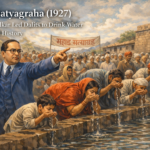
He launched a Marathi journal called Mooknayak (Leader of the Voiceless) in 1920. He organized the Mahad March in 1927, leading thousands of untouchables to a public water tank in Mahad, Maharashtra, to assert their right to drink clean water. The upper castes reacted with violence. But Ambedkar stood firm.
That same year, in one of the most powerful symbolic acts in Indian history, he publicly burned the Manusmriti — an ancient Hindu text that he believed codified the oppression of lower castes and women. It was his declaration that no book, no tradition, no authority had the right to decide a human being’s worth.
He organized countless movements. He faced threats. He faced betrayal. He faced heartbreaking setbacks.
One of the most painful moments came during the Poona Pact of 1932. Ambedkar had successfully negotiated separate electorates for untouchables with the British government — a system that would give them real political representation. But Mahatma Gandhi began a fast unto death, opposing the idea. The political pressure forced Ambedkar to give up separate electorates in exchange for reserved seats in the general legislature.
He signed the pact. He saved Gandhi’s life. But he was furious. He later wrote that he felt he had been cornered — that the moral pressure used against him was deeply unjust.
He carried that grief. But he did not stop.
Lesson 3: Sometimes you will be forced to compromise. Sometimes the world will be unfair even when you are right. Keep going anyway.
Writing the Constitution — A Pen as Powerful as a Revolution
In 1947, when India finally won independence, Dr. Ambedkar was appointed the first Law Minister of independent India. And then came the call that would define his legacy forever.
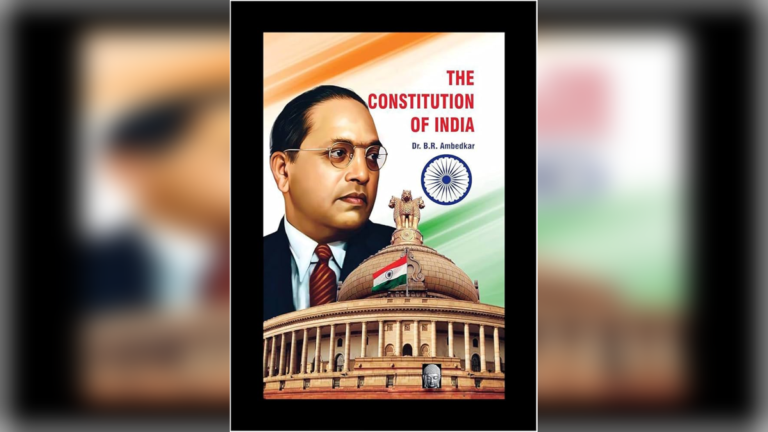
He was appointed Chairman of the Drafting Committee of the Constitution of India.
Think about what this moment meant. The man who had been denied water as a child was now writing the supreme law of the land. The man who had been made to sit on a gunny sack was now building the legal foundation of a free nation.
He worked with legendary intensity. He barely slept. He had serious health problems — he had diabetes and his eyesight was deteriorating. His legs hurt. His body was breaking down. But he kept writing.
He studied the constitutions of more than 60 countries. He synthesized ideas from the American Constitution, the Irish Constitution, the British Parliamentary model, and much more. He fought passionately for the rights of women, minorities, laborers, and the poor to be written into law.
The Constitution he gave India enshrined:
- Equality before the law for every citizen
- Abolition of untouchability as a fundamental right
- Freedom of religion
- Equal rights for women
- Reservation for Scheduled Castes and Scheduled Tribes
When he presented the final draft in November 1949, he made a speech that every Indian student should read. He said:
“On the 26th of January 1950, India will be an independent country. What would happen to her independence? Will she maintain her independence or will she lose it again?”
He warned that political democracy alone was not enough. That economic and social democracy must follow. That, without those, the edifice of political freedom would crumble.
He was not just drafting a legal document. He was writing a dream — a dream of a nation where every person, regardless of birth, would have dignity.
Lesson 4: Use whatever skill or power you have in the service of something bigger than yourself. That is when your life truly becomes meaningful.
The Personal Battles Nobody Talks About
We talk about Dr. Ambedkar’s achievements. But we rarely talk about his personal suffering — the quieter battles that make his story even more remarkable.
He lost his first wife, Ramabai, in 1935. She had suffered silently through years of poverty and hardship alongside him, supporting his education and struggles. Her death broke his heart. He never really spoke much about it publicly, but those who knew him said he was never the same afterward.
He suffered from severe diabetes and a host of other ailments in his later years. Walking became painful. His eyesight failed him. He had to dictate his writings instead of penning them himself.
He faced betrayal from political allies. He saw the causes he fought for being diluted or ignored. He resigned from the Cabinet in 1951 when his Hindu Code Bill — which sought to give equal rights to Hindu women in matters of marriage, inheritance, and divorce — was stalled and eventually abandoned.
He had given everything, and he felt that India was not ready to receive it.
In 1956, just weeks before his death, he took a final step that was also deeply personal. On October 14, 1956, at a massive ceremony in Nagpur, Dr. Ambedkar converted to Buddhism, along with approximately 600,000 followers. He had spent years studying different religions and concluded that Buddhism — with its emphasis on reason, equality, and compassion — was the path that aligned with his values.
It was his ultimate act of freedom. A declaration that he would not be defined by the religion that had oppressed him.
He passed away on December 6, 1956, just 47 days after his conversion. He died with his last manuscript — “Buddha or Karl Marx” — still on his desk.
He died still working.
Lesson 5: Even in pain, even in illness, even in loss — keep creating. Keep contributing. That is the mark of a truly great soul.
What Ambedkar’s Story Teaches Every Student Today
Now, you might be thinking: “This is an inspiring history lesson. But what does it have to do with me? I’m just a student trying to pass my exams.”
Let me tell you — it has everything to do with you.
1. Your circumstances do not determine your destiny
Ambedkar was born into the lowest rung of a brutal social hierarchy. By every measure of his time, he was supposed to fail. He was not supposed to get educated, let alone earn multiple PhDs from world-class universities.
But he refused to accept someone else’s definition of his worth.
You may come from a poor family. You may go to a school with broken benches and no library. You may have parents who cannot help you with your homework. You may face discrimination, bullying, or neglect.
None of that decides where you will end up. Only you decide that.
2. Books are your greatest weapon
Ambedkar once said, “I measure the progress of a community by the degree of progress which women have achieved.” He also famously said that he owed everything to books.
He bought books even when he was hungry. He read even when his eyes were failing. He built a personal library of over 50,000 books — one of the largest private libraries in India at the time.
Books don’t care about your caste, your gender, your bank balance, or your accent. When you open a book, you are equal to every other reader who has ever held it.
Read. Read everything. Read things that challenge you. Read things that confuse you at first. Read until the world makes more sense.
3. Suffering can become your superpower
This might sound strange. But look at Ambedkar’s story. Every humiliation he faced — every time he was made to sit separately, every time he was denied water, every time society tried to crush him — became fuel.
He didn’t forget those wounds. He transformed them. He turned his pain into policy. He turned his anger into action. He turned his tears into law.
When something hard happens to you — when you fail an exam, when a friend betrays you, when a teacher dismisses you — you have a choice. You can let it break you. Or you can let it build you.
4. Excellence is non-negotiable
Notice that Ambedkar never settled for average. He could have gotten one degree and called it enough. But he kept studying. He kept pushing his intellect further and further.
In a world that underestimates you, excellence is your armor. When you are extraordinary, it becomes harder for the world to ignore you.
Work hard. Study deeply. Not to show off — but because mastery is one of the most dignified things a human being can achieve.
5. Fight for others, not just yourself
Ambedkar had every opportunity to use his education for personal gain. Instead, he used it as a battering ram against injustice.
Ask yourself this: “What am I doing with my privilege?” If you have access to education, to the internet, to a safe home — millions of children don’t. What will you do with what you have?
Ambedkar in Numbers — The Scale of His Achievement
Sometimes facts tell a story better than words. Here are some numbers that put Dr. Ambedkar’s achievement into perspective:
- 3 doctorates — from Columbia University (PhD), London School of Economics (DSc), and Osmania University (LLD)
- 1 Barrister’s degree from Gray’s Inn, London
- 50,000+ books in his personal library
- 60+ constitutions studied before drafting India’s
- 395 articles and 8 schedules in the original Constitution of India
- 10,00,000 people who converted to Buddhism alongside him in 1956
- Bharat Ratna awarded posthumously in 1990 — India’s highest civilian honor
- April 14 — observed as Ambedkar Jayanti, a national holiday in India
- His portrait hangs in the Central Hall of Parliament, a permanent reminder of the man who built the democratic foundation of the nation
Voices That Echo His Legacy
Dr. Ambedkar’s impact did not end with his death. His ideas continue to shape India and the world.
Nelson Mandela — the great South African freedom fighter who spent 27 years in prison and still emerged without bitterness — once said that the greatest glory in living lies not in never falling, but in rising every time we fall. Ambedkar lived those words before Mandela ever said them.
Scholar and author Arundhati Roy has written extensively about Ambedkar’s relevance today, arguing that his ideas about caste, democracy, and capitalism are more urgent now than ever.
International scholars at Columbia University, where Ambedkar studied, have created archives and study centers in his honor, recognizing him as one of the most important political thinkers of the 20th century.
And in India, millions of Dalit students, women, laborers, and citizens live lives of dignity today — lives protected by the Constitution that Ambedkar wrote with his own failing hands.
Conclusion: Your Story Is Not Written Yet
Let me leave you with this thought.
When Ambedkar was a little boy sitting on that gunny sack in school, nobody — not one person in that classroom — could have imagined what he would become. Not the teachers who ignored him. Not the peon who poured water from a height. Not the landlords who refused to rent him a house.
Nobody saw it coming. Except him.
He saw it. He believed it. He worked for it every single day, through pain and poverty and prejudice and heartbreak.
And he delivered.
Your story is not written yet. The chapter you are in right now — this student chapter, with its pressures and confusions and small joys — is just the beginning. The world will try to tell you what you are worth. The world will try to put you in a box, label you, and move on.
Don’t let it.
Pick up your books like Ambedkar did. Sharpen your mind as Ambedkar did. Fight for yourself and for others like Ambedkar did.
Because somewhere out there, someone is sitting on a gunny sack today, waiting for the world to change. And you — yes, you — might be the one who changes it.
Jai Bhim. And go study.