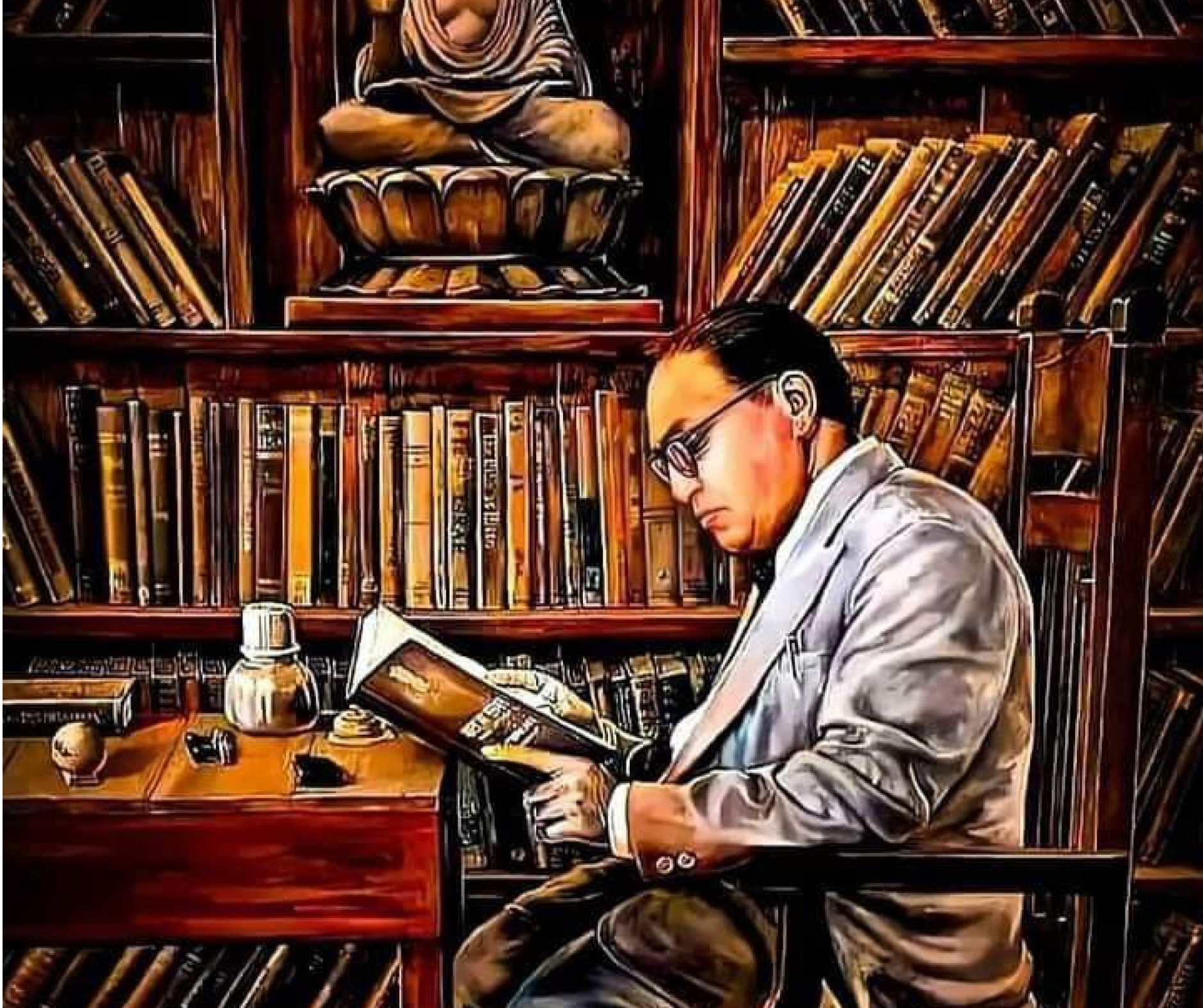

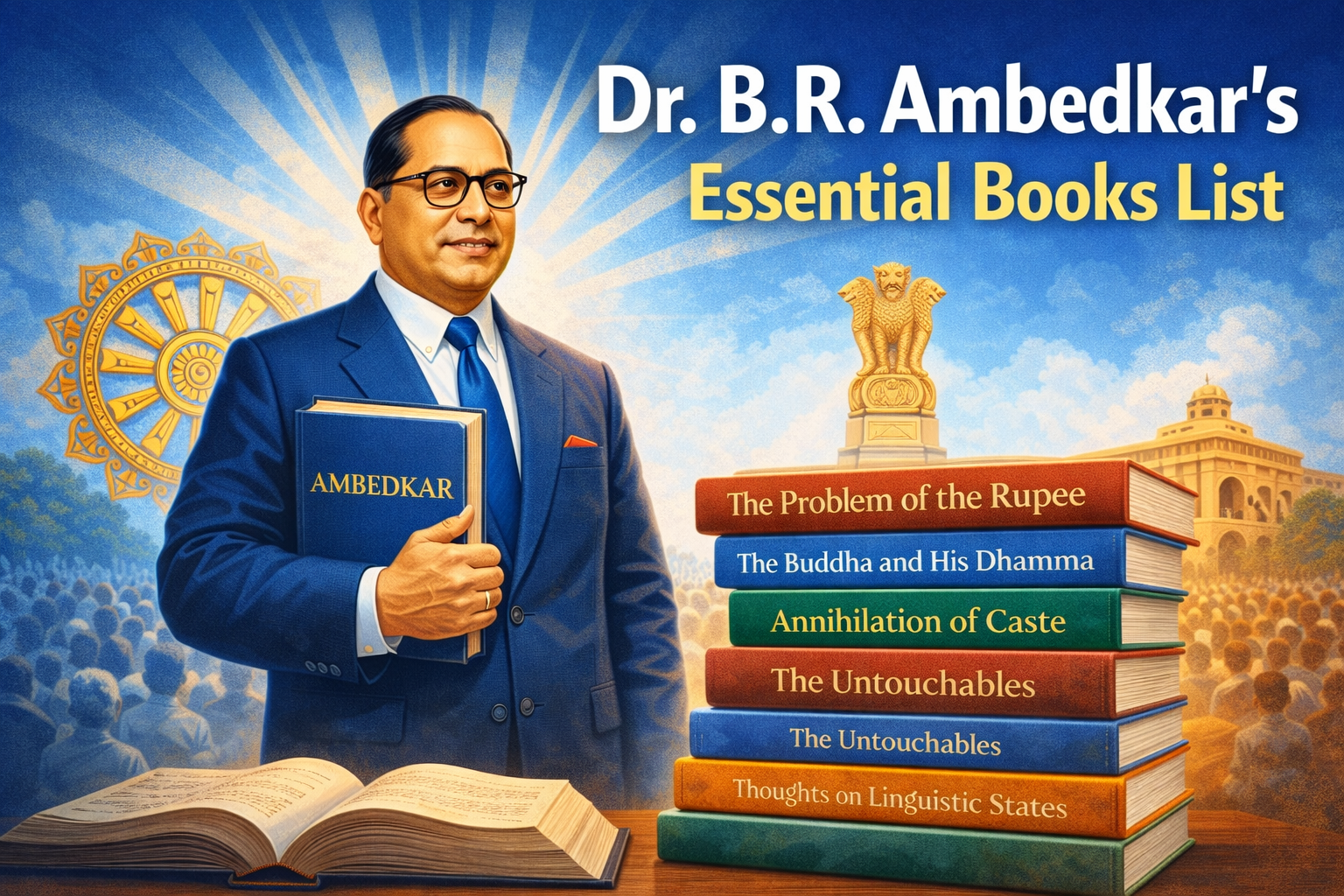
Dr. B.R. Ambedkar had a personal library called Rajgrah with over 50,000 books, making it the largest private library in the world at the time.
He didn’t just collect books. He read all of them. He had mastery over 64 different subjects. He knew 9 languages — English, Hindi, Marathi, Pali, Sanskrit, French, German, Persian, and Gujarati.
And then he wrote his own.
The books Dr. Ambedkar wrote are not dusty old texts. They are living weapons — against caste, against injustice, against every system that tries to keep one human being below another. Two of his books — Annihilation of Caste and The Problem of the Rupee — are still bestsellers in India today.
This is the complete Dr. Ambedkar books list — every major book he wrote, when he wrote it, what it says, and why you should read it.
1. Ambedkar Quotes on Books — What He Said About Reading
Before we list his books, here is what Babasaheb himself said about reading and knowledge. These Ambedkar quotes on books are used by students all over India.
“Cultivation of mind should be the ultimate aim of human existence.” — Dr. B.R. Ambedkar
“Man cannot live by bread alone. He has a mind which needs food for thought.” — Dr. B.R. Ambedkar
“I measure the progress of a community by the degree of progress which women have achieved.” — Dr. B.R. Ambedkar
He did not just say these things. He lived them. The man studied for 21 hours in a single day during his time at the London School of Economics — completing 8 years of study in just 2 years and 3 months.
When he said education is the ultimate aim, he had already proven it with his own life.
2. Was Ambedkar an Economist?
Yes. Dr. Ambedkar was a brilliant economist, and most people do not know this.
He holds a PhD in Economics from Columbia University (1916) and a DSc in Economics from the London School of Economics (1923). His doctoral thesis “The Evolution of Provincial Finance in British India” (1916), was a landmark study in public finance.
His book The Problem of the Rupee (1923) directly influenced the creation of the Reserve Bank of India in 1935. He is recognised among India’s founding economists — alongside figures like P.C. Mahalanobis.
He is not only the Father of the Indian Constitution. He is also rightly called the Father of Indian Economic Policy Reform.
His books span three categories:
- Economics — currency, finance, labour, agriculture
- Social Justice — caste, untouchability, Dalit rights, women’s rights
- Religion and Philosophy — Buddhism, Hinduism, religious conversion
3. Complete Ambedkar Books List — Year by Year
Here is the complete list of books written by Dr. Ambedkar, organised by year:
| Year | Book / Work | Category |
|---|---|---|
| 1916 | Castes in India: Their Mechanism, Genesis and Development | Social Justice |
| 1916 | The Evolution of Provincial Finance in British India (PhD thesis) | Economics |
| 1923 | The Problem of the Rupee: Its Origin and Its Solution (DSc thesis) | Economics |
| 1924 | The Untouchables and the Pax Britannica | Social Justice |
| 1925 | Mooknayak (newspaper, started 1920) | Journalism / Dalit Rights |
| 1927 | Bahishkrit Bharat (newspaper) | Journalism / Dalit Rights |
| 1936 | Annihilation of Caste | Social Justice |
| 1936 | Federation Versus Freedom | Politics |
| 1936 | Which Way to Emancipation | Social Justice |
| 1940 | Thoughts on Pakistan | Politics |
| 1941 | Pakistan or the Partition of India | Politics |
| 1943 | Mr. Gandhi and the Emancipation of the Untouchables | Social Justice |
| 1945 | What Congress and Gandhi Have Done to the Untouchables | Social Justice |
| 1945 | Communal Deadlock and a Way to Solve It | Politics |
| 1946 | Who Were the Shudras? How They Came to Be the Fourth Varna | Social Justice |
| 1947 | States and Minorities | Constitutional Law |
| 1948 | The Untouchables: Who Were They and Why They Became Untouchables | Social Justice |
| 1948 | Maharashtra as a Linguistic Province | Politics |
| 1951 | Need for Checks and Balances | Politics |
| 1956 | The Buddha and His Dhamma (completed just before death, published 1957) | Religion / Philosophy |
| Published posthumously | Waiting for a Visa (autobiography, written 1935–36) | Autobiography |
| Published posthumously | Riddles in Hinduism | Religion |
| Published posthumously | Revolution and Counter-Revolution in Ancient India | History |
| Collected works | Dr. Babasaheb Ambedkar: Writings and Speeches (Volumes 1–24) | All subjects |
4. The 5 Most Important Books by Dr. Ambedkar
If you are reading Dr. Ambedkar’s books for the first time, start with these five. They are the most important, the most widely read, and the most powerful.
Book 1 — Annihilation of Caste (1936)
This is Dr. Ambedkar’s most famous and most powerful book. It was not originally a book at all — it was a speech he prepared for a conference of Hindu social reformers in Lahore. When the organisers read it, they panicked and cancelled his invitation. Ambedkar published it himself.
The book tears apart the Hindu caste system with logic, history, and evidence. He argues that caste is not a division of labour — it is a division of labourers. He argues that caste cannot be reformed from within — it must be annihilated completely.
The book is still read in universities around the world. It is available free to read online and to download.
Best for: Students, activists, UPSC aspirants, and anyone who wants to understand the caste system at its roots.
Book 2 — The Problem of the Rupee (1923)
This is his most important book on economics. He wrote it as his DSc thesis at the London School of Economics.
He argues that the British government artificially overvalued the Indian rupee to make British imports cheaper in India, hurting Indian businesses and workers. He proposes a gold standard for India’s currency and advocates for currency stability.
This book directly shaped the debate that led to the establishment of the Reserve Bank of India in 1935. It is one of the founding texts of modern Indian economic policy.
Best for: Economics students, UPSC aspirants, and competitive exam preparation.
Book 3 — The Buddha and His Dhamma (1956)
This is Dr. Ambedkar’s last and most personal book. He completed the manuscript weeks before his death. It was published in 1957 — after he was gone.
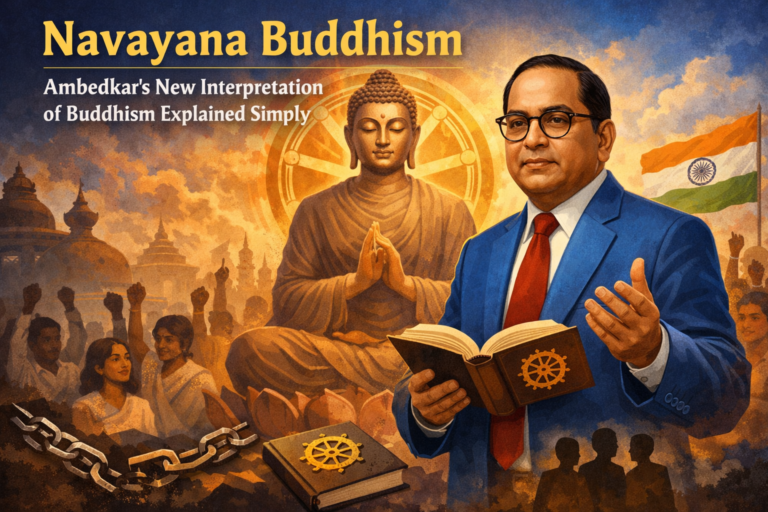
In this book, he reinterprets the teachings of the Buddha through the lens of social justice, equality, and rational thought. He presents Buddhism not as a religion of rituals but as a practical philosophy for living with dignity and compassion.
It is the sacred text of the Navayana Buddhist movement that he started — and is treated with deep reverence by millions of Ambedkarite Buddhists across India.
Best for: Anyone interested in Buddhism, Ambedkar’s spiritual journey, and Navayana Buddhism.
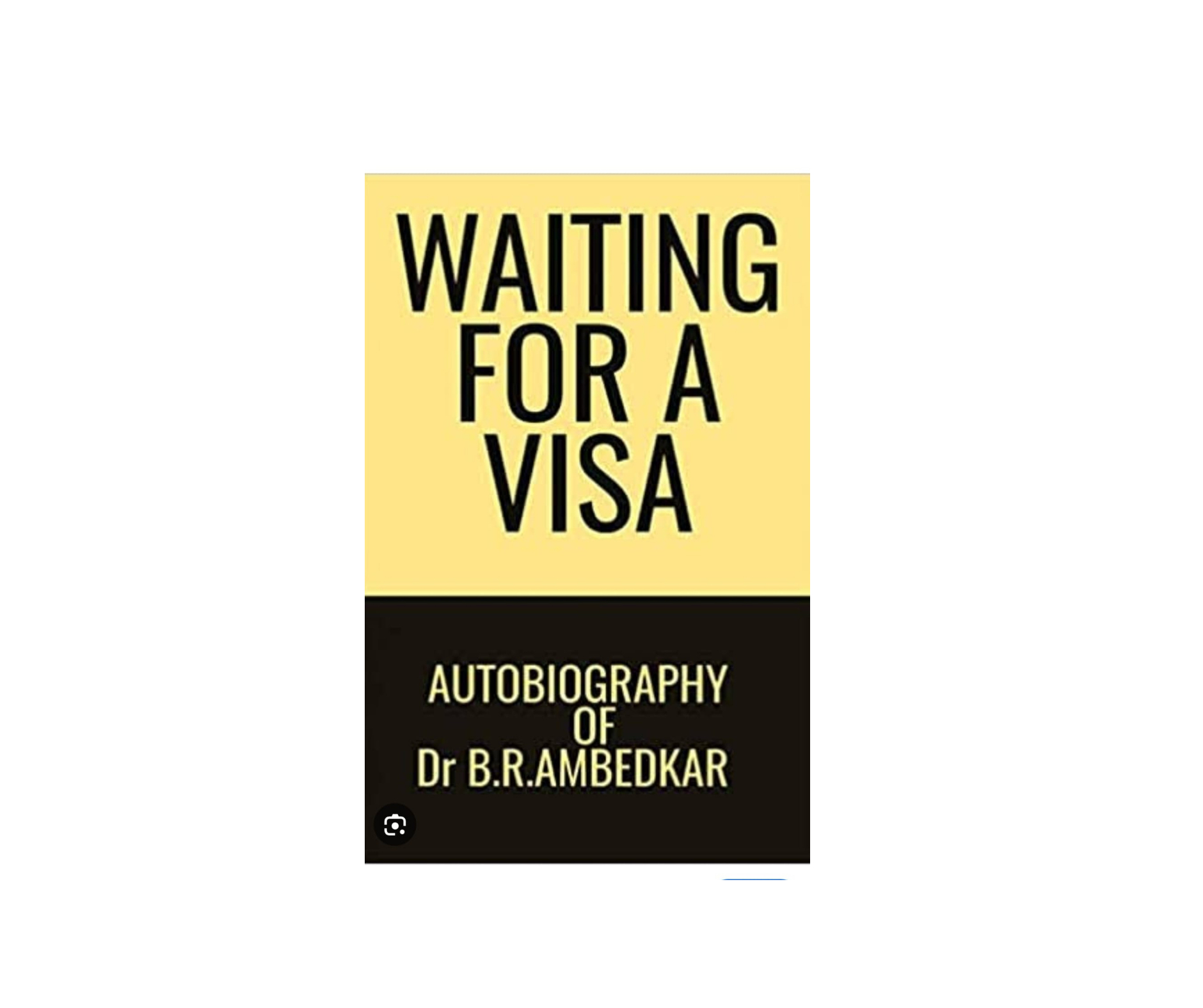
Book 4 — Waiting for a Visa (written 1935–36, published posthumously)
This is Ambedkar’s autobiographical account — just 20 pages long but one of the most moving documents in Indian literature.
He recounts six incidents from his own life where he faced violent, humiliating caste discrimination — including the time he and his brothers were abandoned by a bullock cart driver who refused to take them when he found out they were Mahar. They walked miles in the dark, thirsty and tired.
Columbia University uses this text as a course reading. It is available to download for free online.
Best for: Students who want to understand untouchability through lived experience, not just theory.
Book 5 — Who Were the Shudras? (1946)
In this book, Ambedkar makes a startling historical argument: the Shudras — the lowest class in the Varna system — were originally Kshatriya warriors who were degraded by Brahmin priests over centuries.
He dedicated this book to Jyotirao Phule — the great 19th-century social reformer who first inspired Ambedkar’s grandmother to send her children to school.
This book challenges the entire historical narrative of the caste system and forces the reader to question everything they think they know about Hindu social history.
Best for: History students, sociology students, UPSC aspirants, and researchers.
5. Ambedkar Books List in Different Languages
Students across India search for the book list in their regional language. Here is your guide:
| Language | Where to Get Ambedkar Books |
|---|---|
| Ambedkar books list in English | Amazon.in, Flipkart, ambedkar.org (free PDFs) |
| Ambedkar books list in Marathi | Sugawa Prakashan, Lokvangmay Gruha — both Pune publishers |
| Ambedkar books list in Tamil | Periyar Self-Respect Propaganda Institution, Amazon.in Tamil section |
| Ambedkar books list in Telugu | Navayana Publishers, Amazon.in Telugu section, local bookshops in Hyderabad |
| Ambedkar books list in Kannada | Karnataka Dalit Sahitya Akademi, Bookstores in Bengaluru |
| Ambedkar books list in Hindi | Samyak Prakashan, Gautam Book Centre, Amazon.in Hindi section |
| Babasaheb ambedkar books list in Marathi | Full Marathi translations available from Pune — Jaati Unmulan (Annihilation of Caste) and Rupayachi Samasya (Problem of Rupee) |
6. Where to Read Ambedkar’s Books for Free
Dr. Ambedkar’s work belongs to everyone — especially every SC/ST/OBC student who cannot afford expensive books. Here is where to get them at zero cost:
- ambedkar.org — Official website with free PDFs of all major works
- mea.gov.in/books-by-ambedkar.htm — Government of India’s official Ambedkar books page
- archive.org — Search “BR Ambedkar” for free, readable versions of every book
- Columbia University Library — Digitised versions of his early academic papers
- Dr. Babasaheb Ambedkar: Writings and Speeches (Volumes 1–24) — Published by the Government of Maharashtra, available at all district government offices and free to read online
7. Frequently Asked Questions
Is Ambedkar a good book?
Yes, many books written by Dr. Ambedkar are considered great reads. Annihilation of Caste is one of the most powerful social justice books ever written in India. Waiting for a Visa is a short, moving autobiographical text used as a university reading at Columbia University. The Buddha and His Dhamma is deeply spiritual and philosophical. All three are excellent starting points for new readers.
Was Ambedkar an economist?
Yes. Dr. B.R. Ambedkar was a formally trained economist — he earned his DSc in Economics from the London School of Economics and a PhD from Columbia University. His book The Problem of the Rupee (1923) directly influenced the creation of the Reserve Bank of India in 1935. He had expert command over 64 different academic subjects, including economics, law, sociology, history, and political science.
Who is B.R. Ambedkar?
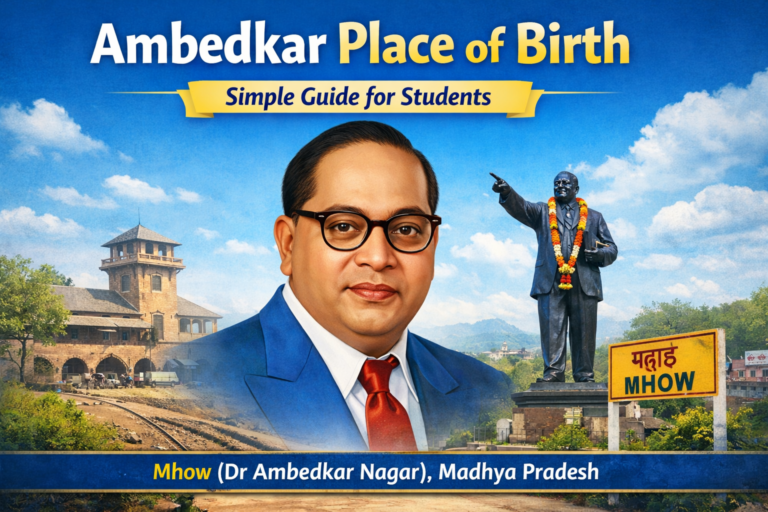
Dr. Bhimrao Ramji Ambedkar — popularly known as Babasaheb — was born on 14 April 1891 in Mhow, Madhya Pradesh. He was a jurist, economist, social reformer, and politician. He is best known as the chief architect of the Indian Constitution and India’s first Law Minister. He fought all his life for the rights of Dalit, SC, ST, and OBC communities, and converted to Buddhism on 14 October 1956. He passed away on 6 December 1956.
Where did Ambedkar come from?
Dr. Ambedkar came from Mhow — a military cantonment in Madhya Pradesh, now officially renamed Dr. Ambedkar Nagar. He was born into the Mahar caste, a Scheduled Caste community from Maharashtra. His family later moved to Satara and then to Mumbai (then Bombay), where he grew up and began his education. He later studied at Columbia University in New York and the London School of Economics in Britain.
How many books did Dr. Ambedkar write?
Dr. Ambedkar wrote over 20 major books and hundreds of articles, speeches, and papers. His collected work fills 24 volumes — published by the Government of Maharashtra as Dr. Babasaheb Ambedkar: Writings and Speeches. His personal library at Rajgrah had over 50,000 books — more than most public libraries. He is recognised as one of the most prolific intellectual writers India has ever produced.
Where can I find Ambedkar books in Kannada, Telugu, or Tamil?
For Ambedkar books list in Kannada — contact the Karnataka Dalit Sahitya Akademi in Bengaluru or search Amazon.in for Kannada editions. For Ambedkar books list in Telugu — Navayana Publishers and local bookshops in Hyderabad stock Telugu translations. For Ambedkar books list in Tamil — the Periyar Self-Respect Propaganda Institution and online Tamil booksellers carry Tamil editions of his major works.
Conclusion
Dr. Ambedkar believed that “Man cannot live by bread alone — he has a mind which needs food for thought.”
And then he spent his entire life providing that food — through books, articles, speeches, and arguments — to millions of people who had been told their minds did not matter.
His books are free. His wisdom is free. His sacrifice gave you the right to read, to think, and to rise.
Open one of his books today. Start with Annihilation of Caste. Then, waiting for a Visa. Then The Buddha and His Dhamma.
By the time you finish all three, you will understand not just who Ambedkar was — but who you are, and what you are capable of.
Jai Bhim.