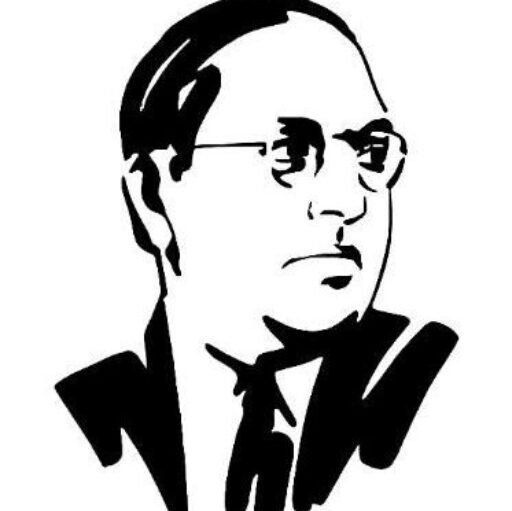
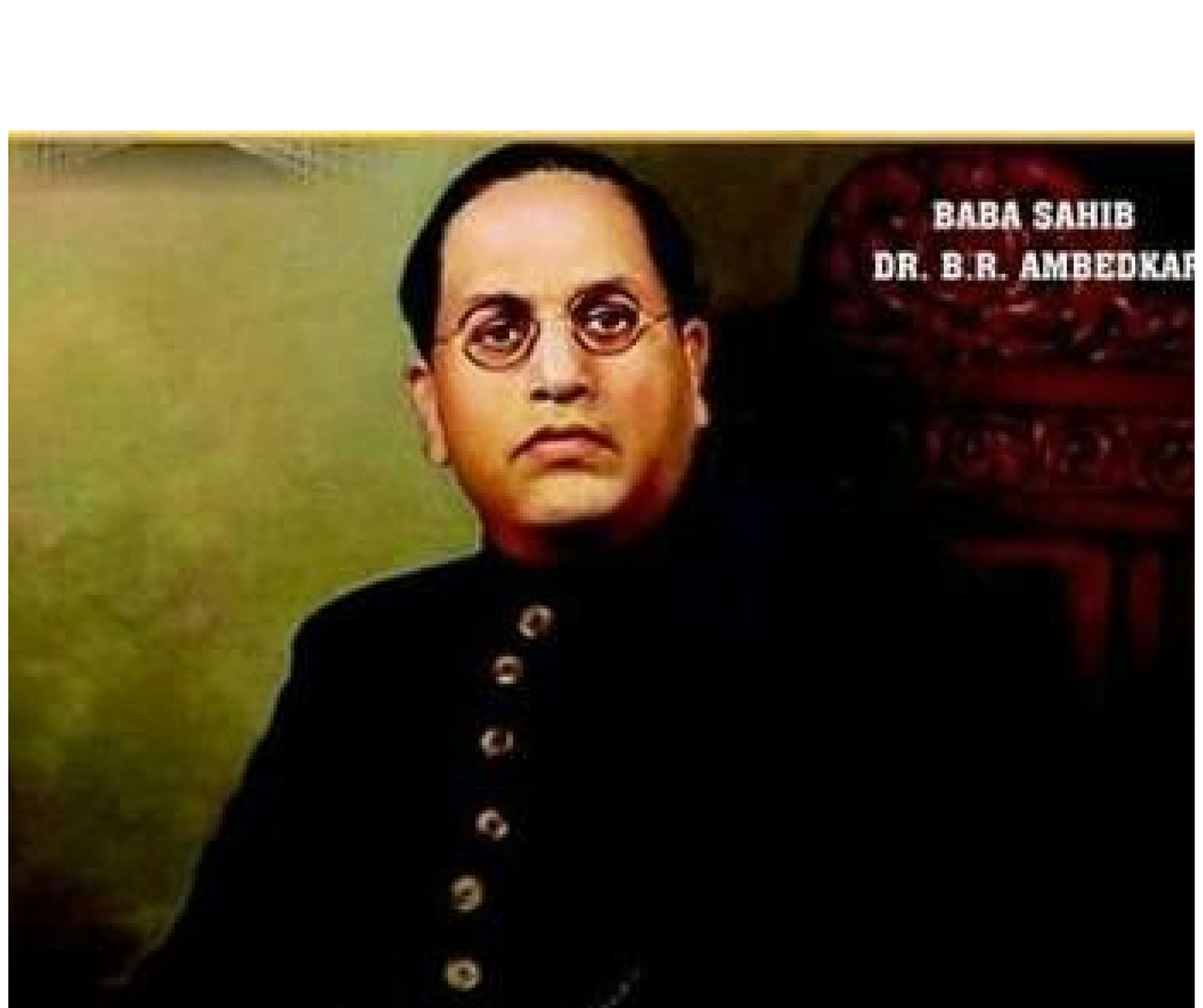
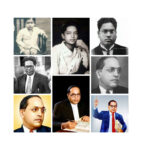
Dr. B.R. Ambedkar’s biography is the story of the most extraordinary man India has ever produced. A boy who was not allowed to drink water in school grew up to write the law of the largest democracy on earth. His full name was Bhimrao Ramji Ambedkar — but millions of people across India call him simply Babasaheb, which means “respected father.”
He was a jurist, economist, social reformer, politician, and the chief architect of the Indian Constitution. He fought all his life so that people born in lower castes could live with dignity, get an education, and be treated as equal human beings.
If you are an SC, ST, or OBC student in India, the rights you enjoy today, the reservations in your college, the scholarships in your name — all of it exists because of this one man.
Dr. BR Ambedkar biography in English is his complete life story. Written in simple language so every student can understand.
Dr. B.R. Ambedkar was an Indian leader who lived from 14 April 1891 to 6 December 1956. He was many things at once — a lawyer, an economist, a politician, and India’s greatest social reformer.
But more than his titles, he was a fighter. He fought against caste discrimination and untouchability at a time when it was extremely dangerous to do so. He fought for the rights of millions of people who were treated worse than animals simply because of the family they were born into.
Here is a quick snapshot of the man:
Detail
Information
Full Name
Bhimrao Ramji Ambedkar
Popular Name
Babasaheb Ambedkar
Born
14 April 1891
Birthplace
Mhow, Madhya Pradesh
Caste
Mahar (Scheduled Caste)
Father
Ramji Maloji Sakpal
Mother
Bhimabai Sakpal
Education
Columbia University (PhD), London School of Economics (DSc), Gray’s Inn (Barrister)
Profession
Jurist, Economist, Politician, Social Reformer
Major Achievement
Chief Architect of the Indian Constitution
Death
6 December 1956, New Delhi
Highest Award
Bharat Ratna (1990, posthumous)
Dr. Ambedkar is remembered most as the chief architect of the Indian Constitution — the document that runs India’s democracy and guarantees equal rights to every citizen.
2. Where Was Ambedkar Born? — Early Life and Family
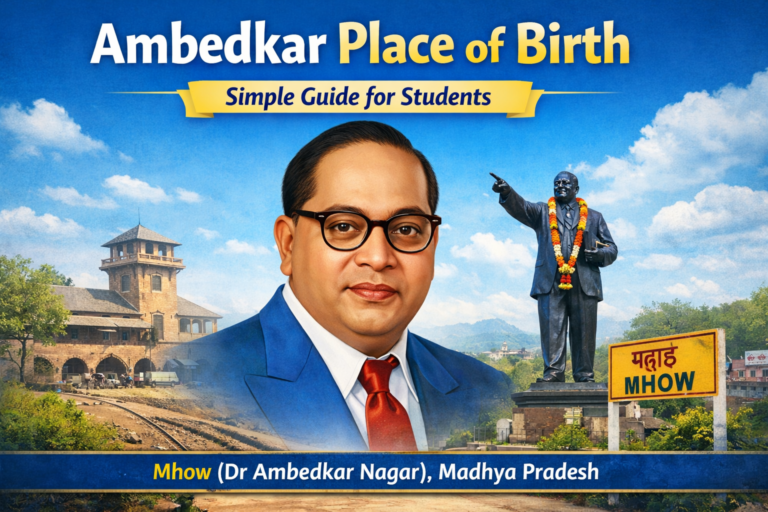
Dr. B.R. Ambedkar was born on 14 April 1891 in the town of Mhow, a military cantonment in the Central Provinces of British India, now known as Dr. Ambedkar Nagar in Madhya Pradesh.
He was the 14th and last child of his parents. His father, Ramji Maloji Sakpal, was a Subedar (officer) in the British Indian Army. His mother’s name was Bhimabai Sakpal.
His family belonged to the Mahar caste — one of the communities classified as “untouchable” under India’s rigid caste system. The Mahar community had long served in the British Indian Army, which meant Ramji Sakpal was a disciplined, educated man who understood the value of learning.
Unlike many Dalit families of that time, Ramji Sakpal made sure his children went to school. He was a follower of Kabir, a saint who believed all human beings are equal. This belief was passed on to young Bhimrao.
When Bhimrao was just two years old, his father retired from the army. When he was five years old, his mother passed away. The children were then looked after by their paternal aunt. Life was hard. Money was scarce. But the hunger for education in young Bhimrao never died.
3. Childhood Pain — What Untouchability Did to Young Bhimrao
This is the part of Dr. Ambedkar’s biography that every student must read and remember. Because what happened to him as a child is the reason he fought so hard as an adult.
When Bhimrao started school in Satara, Maharashtra, he was not treated like the other students.
He was made to sit outside the classroom on a gunny sack that he had to bring from home and take back every day. He could not sit on the same benches as upper-caste students.
He was not allowed to drink water from the common tap or pot. When he was thirsty, he had to wait for the school peon — a lower staff member — to pour water into his hands from a height, so that his hands would not “pollute” the vessel. Ambedkar later described this in his writings with three heartbreaking words: “No peon, no water.”
If the peon was absent, young Bhimrao went the entire day without drinking water.
Teachers ignored him. Fellow students refused to play with him. Even when his family moved to Bombay (now Mumbai), the discrimination followed.
But here is the extraordinary thing about young Bhimrao — he did not run away from education. He ran towards it. Every humiliation made him study harder. Every rejection made him more determined.
He later said, “I measure the progress of a community by the degree of progress which women have achieved.” And he understood from childhood that education was the only weapon that could break the chains of caste.
His surname at birth was Sakpal. His name was later changed to Ambedkar by a Brahmin teacher named Krishnaji Keshav Ambedkar, who had great affection for young Bhimrao — an act of kindness that stood apart from the discrimination that surrounded him.
4. Ambedkar’s Education — From Mhow to Columbia University
Dr. Ambedkar’s educational journey is one of the most remarkable in human history. Against every possible barrier — poverty, caste discrimination, lack of resources — he kept studying. And studying. And studying.
Here is his complete education timeline:
1907 — Passed his Matriculation examination from Bombay University. He became one of the very first Dalit students to achieve this.
1908 — Enrolled at Elphinstone College, Mumbai, for his graduation. He received a scholarship of ₹25 per month from Sayajirao Gaikwad III, the Maharaja of Baroda — a progressive king who believed in educating Dalit students.
1912 — Graduated with a Bachelor of Arts (BA) in Economics and Political Science from Bombay University.
1913 — Received a prestigious scholarship from the Maharaja of Baroda to study abroad. He sailed to the United States and enrolled at Columbia University in New York.
At Columbia, he studied under the great American philosopher John Dewey, who became his intellectual mentor and deeply influenced his thinking about democracy, equality, and liberty.
1915 — Completed his Master of Arts (MA) in Economics from Columbia University.
1916 — Submitted his doctoral thesis titled “National Dividend of India — A Historic and Analytical Study” and received his PhD from Columbia University. His first published academic paper was “Castes in India: Their Mechanism, Genesis and Development” — a groundbreaking work that analysed the caste system scientifically.
After Columbia, he moved to London and enrolled at the London School of Economics (LSE) to study economics and joined Gray’s Inn to study law.
Due to a lack of funds, he had to return to India in 1917. But he came back again in 1920 — this time with financial help from Chatrapati Shahuji Maharaj of Kolhapur.
1921 — Earned his MSc from London University.
1922 — Called to the Bar at Gray’s Inn, becoming a qualified Barrister-at-Law.
1923 — Submitted his doctoral thesis, “The Problem of the Rupee: Its Origin and Its Solution,” and earned a DSc in Economics from the London School of Economics, one of the world’s top universities.
By the time he returned to India for good, Dr. Ambedkar held:
A PhD from Columbia University
A DSc from the London School of Economics
A Barrister-at-Law qualification from Gray’s Inn, London
He was one of the most educated people in the entire world at that time — Dalit or otherwise.
5. Return to India — The Discrimination Never Stopped
You might think that after earning degrees from Columbia and LSE, Dr. Ambedkar would be treated with respect in India. He was not.
When he returned to India and took up a position as Defence Secretary to the King of Baroda — a job arranged because of his scholarship bond — he was denied accommodation. No one would rent him a house because he was from the Mahar caste. He had to live in a Parsi inn pretending to be a Parsi. When his identity was discovered, he was thrown out.
He then took up a professorship at Sydenham College of Commerce and Economics in Mumbai in 1918. He was a brilliant and popular teacher. But other professors refused to share a drinking water jug with him. The same discrimination he had faced as a child followed him into professional life.
These experiences did not break him. They confirmed for him that the caste system was not just a social inconvenience — it was a deep, systematic oppression that needed to be legally dismantled.
He began publishing newspapers and journals to raise awareness about Dalit rights. He started:
Mooknayak (Leader of the Silent) — 1920
Bahishkrit Bharat (Ostracised India) — 1927
Equality Janta — 1929
These publications gave millions of Dalit people a voice for the first time. They were revolutionary acts.
He also founded the Bahishkrit Hitkarini Sabha (Society for the Welfare of the Ostracised) in 1923 — an organisation that worked to spread education and improve the social and economic condition of the untouchable communities.
6. The Fight Begins — Mahad Satyagraha 1927
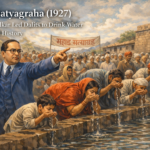
One of the most powerful moments in Dr. Ambedkar’s life came on 20 March 1927 in the town of Mahad, Maharashtra.
In Mahad, there was a public water tank called Chavdar Lake. Dalits were forbidden from drawing water from this tank — even though it was public property, paid for by taxes that Dalits also paid.
Dr. Ambedkar led thousands of Dalit men and women to the Chavdar Lake. He walked up to the tank and drank water from it. This simple act — drinking water from a public tank — was treated as a revolutionary rebellion by the upper-caste establishment.
Upper-caste groups reacted with violence. They claimed the tank had been “polluted.” Dr. Ambedkar responded by organising another march and publicly burning a copy of Manusmriti — the ancient Hindu text that codified caste hierarchy and untouchability.
This event — known as the Mahad Satyagraha — was the first major organised civil rights movement for Dalit rights in India. It showed that untouchable communities had the courage to demand their rights publicly and peacefully.
At the event, Ambedkar said words that became famous: “Untouchability is not a simple matter — it is the mother of all our poverty and lowliness.”
7. Round Table Conferences and the Poona Pact
Between 1930 and 1932, the British government held three Round Table Conferences in London to discuss India’s future constitution and political reforms.
Dr. Ambedkar attended all three conferences as the sole representative of the untouchable communities of India. He was the only voice on that international stage demanding rights for India’s most marginalised people.
His main demand was separate electorates for Dalits — meaning Dalit voters would elect their own representatives, ensuring their political voice could not be drowned out.
The British granted this in what was called the Communal Award of 1932.
But Mahatma Gandhi — who was in prison at the time — opposed separate electorates. He feared it would permanently divide Hindu society. Gandhi went on a fast-unto-death to protest.
Dr. Ambedkar faced an impossible choice. If he held firm to separate electorates, Gandhi might die — and millions of people would blame the Dalit community. If he gave in, Dalits would lose independent political representation.
He chose to compromise. On 25 September 1932, he signed the Poona Pact with Gandhi. Under this agreement:
Separate electorates were dropped
But reserved seats for Dalits within the general electorate were significantly increased — from 71 seats to 148 seats in provincial legislatures
The Poona Pact remains one of the most debated moments in Indian history. Ambedkar later wrote that he felt he had been forced into a corner. But the reserved seats it created became the foundation of political reservation for the Scheduled Castes in independent India.
8. Ambedkar and the Indian Constitution
This is Dr. Ambedkar’s greatest achievement — and one of the greatest intellectual feats in world history.
When India became independent on 15 August 1947, a Constituent Assembly was formed to write India’s Constitution. Dr. Ambedkar was elected to the Constituent Assembly and was appointed Chairman of the Drafting Committee — the small group responsible for actually writing the Constitution.
This was not a symbolic appointment. The Drafting Committee did the hardest work. They had to turn the hopes, values, and legal framework of a newly free nation into a working document — one that would govern over 300 million people of extraordinary diversity.
Dr. Ambedkar worked on the Constitution with almost superhuman dedication. He was suffering from serious health problems — diabetes and eye weakness — during this period. He often worked through the night. He studied constitutions from around the world. He argued, debated, and refined every clause.
The Constitution of India was adopted on 26 November 1949 — a date now celebrated as Constitution Day (Samvidhan Diwas). It came into effect on 26 January 1950 — Republic Day.
What Dr. Ambedkar built into the Constitution for SC/ST/OBC communities:
Article
What It Does
Article 14
Right to Equality — every citizen is equal before the law
Article 15
No discrimination on the basis of caste, religion, sex, or place of birth
Article 16
Equal opportunity in government jobs for all citizens
Article 17
Abolition of Untouchability — made it a punishable offence
Article 46
The state must promote the educational and economic interests of SC/ST
Articles 330 & 332
Reserved seats for SC/ST in Parliament and state assemblies
Article 17 is perhaps his most personal contribution. The practice that had denied him water as a child — untouchability — he made illegal for the entire nation. With one article, he erased what centuries of tradition had enforced.
When he presented the final Constitution to the Constituent Assembly on 25 November 1949, he gave one of the most powerful speeches in Indian parliamentary history. He warned: “On 26 January 1950, India will be a country of contradictions. In politics, we will have equality. In social and economic life, we will have inequality. We must remove this contradiction at the earliest possible moment.”
9. Ambedkar as India’s First Law Minister
When Prime Minister Jawaharlal Nehru formed India’s first cabinet in 1947, Dr. Ambedkar was appointed India’s first Law Minister.
In this role, he worked to reform laws that discriminated against women and lower castes. His most ambitious project was the Hindu Code Bill — a sweeping reform of Hindu personal laws that would give women:
Equal rights to inherit property
The right to divorce
Protection in marriage
The Hindu Code Bill was one of the most progressive pieces of legislation proposed in post-independence India. But it faced fierce opposition from conservative sections of Parliament and the ruling party.
When the bill was repeatedly delayed and diluted, Dr. Ambedkar resigned from the cabinet in September 1951 — giving up one of the most powerful positions in the country as a matter of principle.
He could not stay in a government that would not protect the rights of women and the marginalised.
10. Why Is Dr. Ambedkar Important? — His Legacy
Dr. Ambedkar is important not just as a historical figure — he is important because his work directly affects the daily life of hundreds of millions of Indians right now, in 2026.
Here is why he matters to you personally if you are an SC, ST, or OBC student:
Reservations in Education — The system that gives you reserved seats in colleges and universities exists because of his direct advocacy during the Constituent Assembly debates.
Scholarships — Government scholarships named after Dr. Ambedkar were created to carry forward his belief that every Dalit student deserves the chance to study. [Apply for SC ST Scholarship 2025-26 here.]
Legal Protection — The SC/ST Atrocities Act exists because the Constitutional foundation he built made it possible.
Political Voice — Reserved seats in Parliament and state assemblies for SC/ST communities came directly from his negotiations and Constitutional drafting.
Equal Dignity — Article 17 made untouchability illegal. Every time a Dalit person is treated with dignity and respect in public — at a water tap, in a classroom, in a government office — that is Ambedkar’s work made real.
Beyond India, Dr. Ambedkar’s work on affirmative action, constitutional democracy, and minority rights has influenced thinkers, lawyers, and social reformers around the world. When US President Barack Obama addressed the Indian Parliament in 2010, he specifically mentioned Dr. Ambedkar as an inspiration for India’s democratic journey.
11. Conversion to Buddhism — The Final Statement
On 14 October 1956 — just two months before his death — Dr. Ambedkar made a decision that had been building inside him for decades.
In a massive public ceremony in Nagpur — at a place now called Deekshabhoomi — he formally converted to Buddhism, along with an estimated 600,000 followers.
He had declared his intention back in 1935 at a rally in Yeola: “I was born in Hinduism, but I will not die a Hindu.” It took him twenty years to find the right path and the right moment.
He chose Buddhism because he believed it was a religion of reason, equality, and compassion — one that rejected the caste hierarchy. He studied Buddhism for years and wrote his final and most personal book: “The Buddha and His Dhamma,” which was published after his death.
His conversion was not just a personal spiritual act. It was a political and social statement: that the untouchable communities of India could choose dignity over a system that dehumanised them.
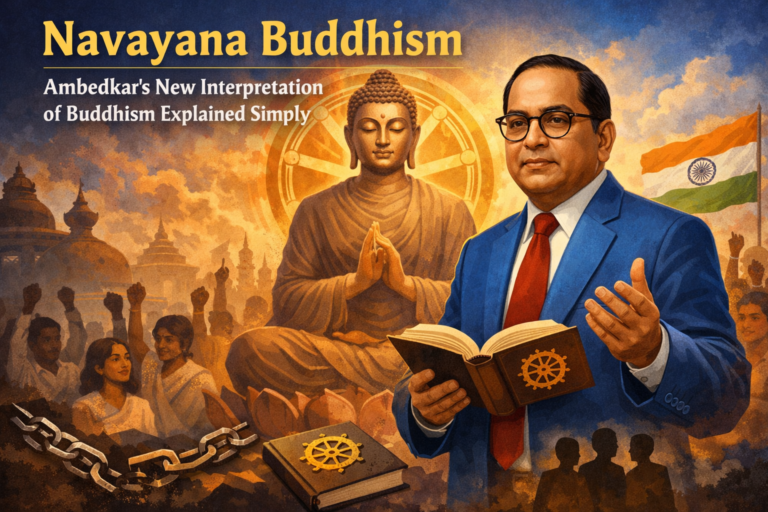
The movement he started — called Navayana Buddhism or the Ambedkarite Buddhist movement — continues today. Millions of Dalits across Maharashtra and beyond identify as Ambedkarite Buddhists.
12. Death of Dr. Ambedkar — 6 December 1956
Dr. Ambedkar’s health had been declining for years. He suffered from diabetes and had severely weak eyesight. He worked through pain and illness throughout the final years of his life.
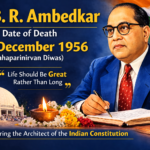
On 6 December 1956, just 47 days after his conversion to Buddhism, Dr. B.R. Ambedkar passed away in his sleep at his home in Delhi.
He was 65 years old.
His death was observed as a national moment of mourning. His funeral in Mumbai was attended by over 600,000 people — one of the largest funeral gatherings in Indian history.
Every year on 6 December, millions of his followers gather at Chaityabhoomi in Dadar, Mumbai, to observe Mahaparinirvan Diwas — the day of his passing.
13. Awards and Honours
Dr. Ambedkar’s contributions were recognised during his lifetime and after:
Bharat Ratna (1990) — India’s highest civilian award, given posthumously by the Government of India under Prime Minister V.P. Singh
A 12-foot bronze statue was installed in the Parliament of India on 2 April 1967
His portrait was placed in the Central Hall of Parliament House in 1990
His birthplace, Mhow, was renamed Dr. Ambedkar Nagar
14 April is declared a national gazetted holiday
His PhD institution, Columbia University, honoured him among its greatest alumni
14. Frequently Asked Questions
Who was Dr. B.R. Ambedkar?
Dr. B.R. Ambedkar — full name Bhimrao Ramji Ambedkar — was an Indian jurist, economist, social reformer, and politician who lived from 1891 to 1956. He is best known as the chief architect of the Indian Constitution, India’s first Law Minister, and the leader who fought for the rights of Dalit and other marginalised communities. He is also called Babasaheb, meaning “respected father,” by his followers.
Why is Dr. Ambedkar important?
Dr. Ambedkar is important because his work directly changed the lives of hundreds of millions of people. He wrote the Indian Constitution, which abolished untouchability (Article 17) and guaranteed equality (Articles 14, 15, 16) for every citizen. He fought for reservations in education and government jobs for SC/ST/OBC communities. Without his work, the rights, scholarships, and legal protections that Dalit and OBC students benefit from today would not exist.
Who was Doctor Bhimrao Ambedkar?
Doctor Bhimrao Ramji Ambedkar was one of the most educated Indians of the 20th century — holding a PhD from Columbia University, a DSc from the London School of Economics, and a Barrister-at-Law qualification from Gray’s Inn. He was born into a Dalit Mahar family in 1891, faced severe caste discrimination throughout his life, and used education as his weapon to fight for the rights of India’s most marginalised communities. He passed away on 6 December 1956, shortly after converting to Buddhism.
Where was Ambedkar born?
Dr. B.R. Ambedkar was born on 14 April 1891 in the town of Mhow, a military cantonment in the Central Provinces of British India, now located in Madhya Pradesh. The town has since been officially renamed Dr. Ambedkar Nagar in his honour. He was the 14th and last child of Ramji Maloji Sakpal, a Subedar in the British Indian Army.
What did Ambedkar do for Dalits?
Dr. Ambedkar dedicated his entire life to the uplift of Dalit communities. He led the Mahad Satyagraha (1927) to fight for Dalits’ right to access public water. He represented Dalits at the Round Table Conferences in London. He negotiated the Poona Pact to secure reserved seats in the legislature. He wrote Article 17 of the Indian Constitution, abolishing untouchability. He founded the People’s Education Society to provide affordable education for Dalits. He converted to Buddhism in 1956 with 600,000 followers to liberate Dalits from the oppressive caste hierarchy.
How many degrees did Dr. Ambedkar have?
Dr. Ambedkar earned an extraordinary number of academic qualifications. He had a BA from Bombay University, an MA and PhD from Columbia University (New York), an MSc and DSc from the London School of Economics, and a Barrister-at-Law qualification from Gray’s Inn in London. He also spent time studying at the University of Bonn in Germany. He is considered one of the most educated individuals of his era anywhere in the world.
Conclusion
Dr. B.R. Ambedkar’s biography is not just a story about one man. It is a story about what one human being can achieve when they refuse to accept the limits others place on them.
He was denied water as a child. He gave a nation its Constitution as an adult.
He was made to sit on the floor. He sat at the head of the Constituent Assembly’s Drafting Committee.
He was called untouchable. He wrote the law that made untouchability a crime.
His weapon — then and now — was education. He studied harder than anyone. He read more than anyone. He used knowledge as his sword and justice as his shield.
For every SC, ST, and OBC student reading this today: you have something Dr. Ambedkar did not have when he started. You have the rights he built for you. You have the reservations he fought for. You have the scholarships named after him.
Do not waste what Babasaheb built. Study hard. Know your rights. Rise and succeed.