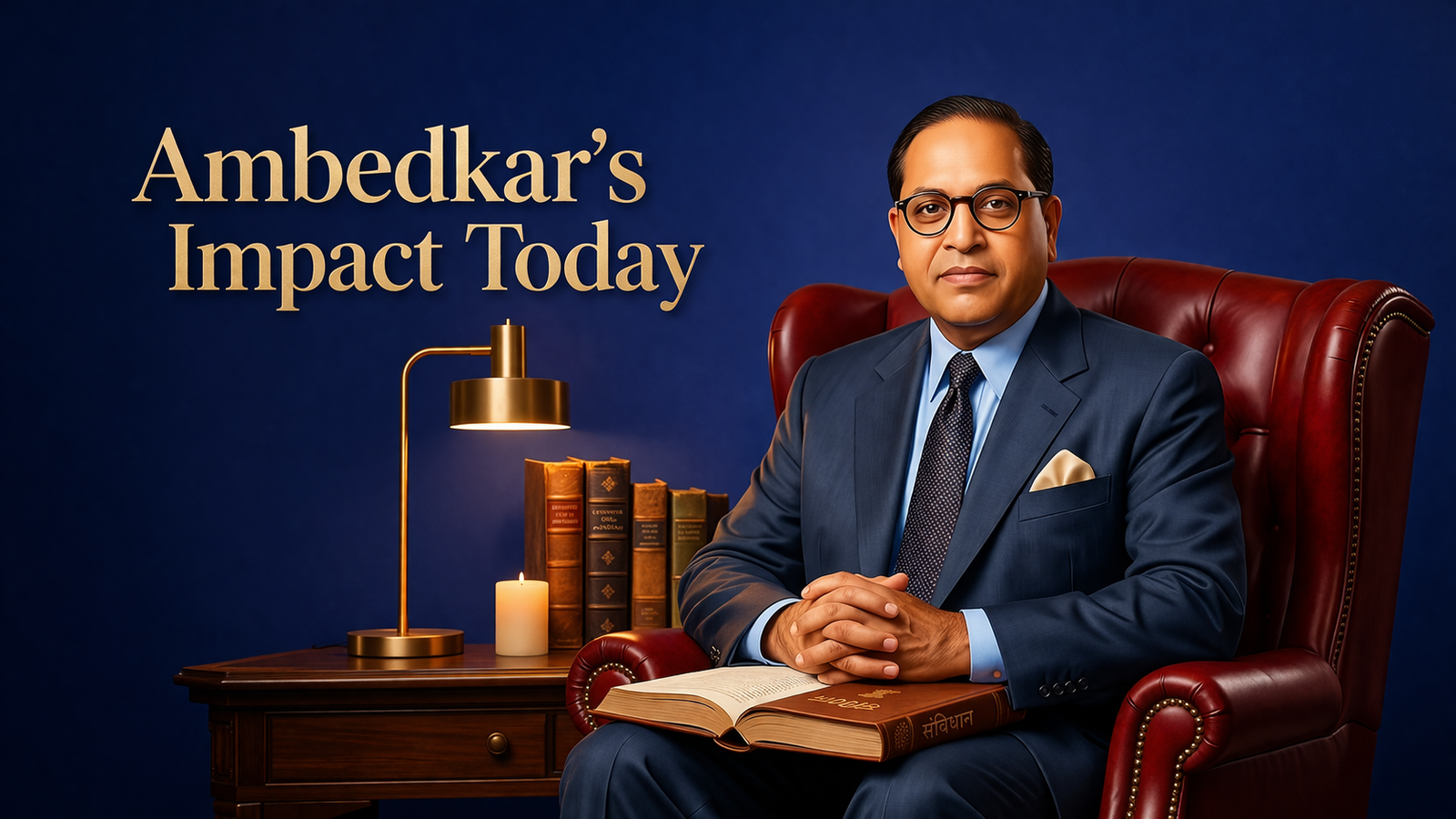
“I measure the progress of a community by the degree of progress which women have achieved.”— Dr. B.R. Ambedkar
Let me ask you something personal before you read this article, “Ambedkar Impact Today.”
When you wake up tomorrow morning, open your bank account, cast a vote, walk into a classroom, or file a complaint against workplace discrimination — do you ever stop and wonder: who made this possible for me?
If you’re one of the 1.4 billion people living in India, a significant part of the answer is the same man.
A man who was born into a society that didn’t even allow him to drink water from a public tap. A man who faced humiliation in school, on trains, in offices, and who responded not with bitterness but with books, laws, and an unshakeable belief in human dignity.
That man is Dr. Bhimrao Ramji Ambedkar. And in 2026, on his 135th birth anniversary, the question isn’t whether his work still matters. The real question is: do we even realise how deeply his work shapes every single day of our lives?
Babasaheb wasn’t just a lawyer. He wasn’t just a politician. He was India’s most educated founding father. holding doctorates from Columbia University and the London School of Economics, at a time when most of his community was barred from entering temples, let alone lecture halls.
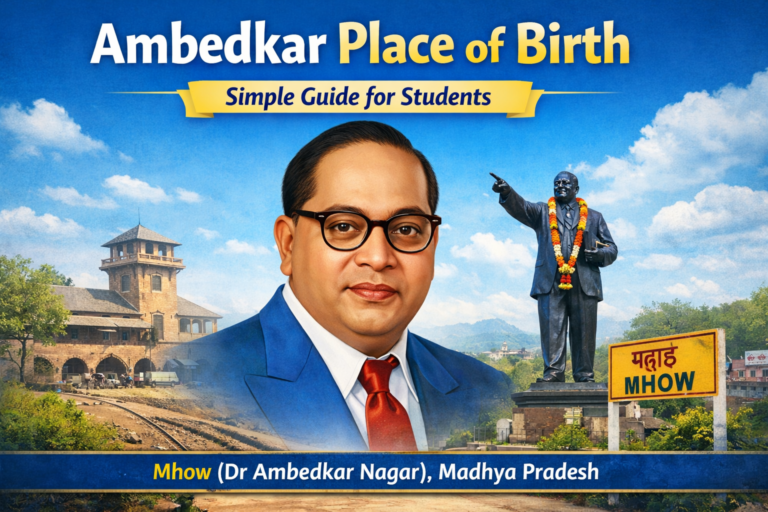
Born on April 14, 1891, in Mhow, Madhya Pradesh, he grew up in a world of crushing caste discrimination. As a child, he was denied the most basic rights, access to water, and the ability to sit in classrooms like any other student. And yet, instead of accepting this as fate, he chose education as his weapon.
He fought his way to the highest halls of learning in the world, and then came back not to enjoy his success, but to dismantle the system that had tried to destroy him.
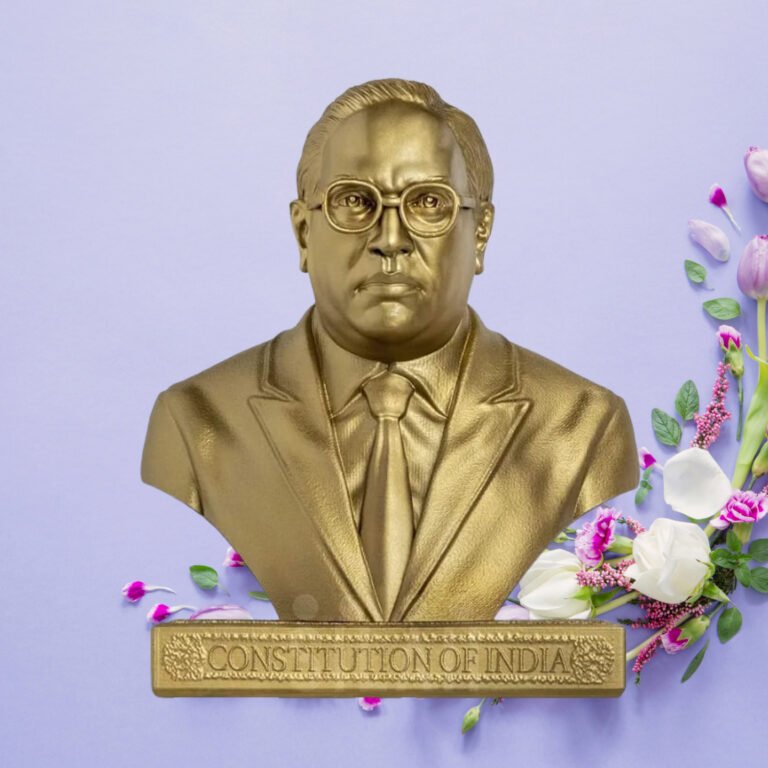
When the time came to write India’s Constitution, the nation turned to Ambedkar. As the principal architect of the Indian Constitution, he embedded the very idea of who deserves rights, and his entire career was built on the answer that every single citizen does.
Ambedkar Impact Today 2026: – 6 Ways He Still Changes Lives
1. Every Indian’s Rights Are Written in His Hand
Think about this. He ensured that the Constitution guaranteed equality, dignity, and fundamental rights for all citizens — speaking for those who had never been heard before. Articles 14, 15, 16, and 17 of the Constitution — which guarantee equality before law, prohibit discrimination, ensure equal opportunity in public employment, and abolish untouchability — these are Ambedkar’s direct gift to you. Not a symbolic one. A legal one. One that courts have upheld thousands of times.
When a woman files a sexual harassment complaint at work today, she does so under laws rooted in constitutional provisions Ambedkar insisted upon. When a Dalit student gets a scholarship, that scheme flows from affirmative action frameworks he built into India’s governance DNA. His ideas illuminate the right path for modern India’s ongoing journey toward equality and justice.
2. The Reservation System: Imperfect But Transformative
Reservations are debated endlessly. But here’s what the data tells you. Before reservations, entire communities had zero representation in education, government, and public life. Today, millions of first-generation students — the first in their families to go to college — are doing so because of policies Ambedkar championed.
His advocacy for affirmative action and reservation policies has enabled countless individuals to access education and employment — yet ongoing efforts remain vital to extend these opportunities universally. That “yet” matters. Ambedkar himself never believed reservations were the finish line. They were a starting block. In 2026, that starting block has launched millions of lives into spaces that once had “no entry” signs.
3. Women’s Rights: The Unfinished Revolution He Started
Here’s something that often gets buried. Ambedkar wasn’t just a champion for Dalits. He was one of India’s earliest and most passionate advocates for women’s rights.
He strongly supported the Hindu Code Bill in 1951, which sought to codify and reform personal laws relating to marriage, inheritance, and divorce. When the bill was diluted beyond recognition in Parliament, he resigned from the cabinet, citing his inability to accept a compromise on women’s rights.
Read that again. He resigned from a cabinet post for women’s rights. In 1951. That single act of moral courage laid the foundation for every legal protection women enjoy today — from the Domestic Violence Act to equal inheritance rights. His feminist legacy remains deeply relevant in contemporary India, especially amid ongoing issues like gender-based violence, caste atrocities, and socio-economic exclusion.
4. Education as Liberation — His Most Urgent Message in 2026
Three words. Educate. Agitate. Organise. This was Ambedkar’s call to action. Not a slogan — a survival strategy. He understood, with painful personal clarity, that an uneducated person is one who can be exploited, deceived, and controlled.
He famously declared education as the “milk of a tigress,” urging the oppressed to pursue learning with courage. In the digital era, educational inequity remains a challenge, especially in rural India, making his call for inclusive and quality education ever-relevant.
💡 In 2026, India’s gross enrolment ratio in higher education has crossed 27% — still far below where it should be. Dropout rates for Dalit girls at the secondary level remain disproportionately high — over 30% — due to poverty, early marriage, and unsafe school environments. Ambedkar’s battle is still being fought in every rural classroom.
5. Democracy and the Constitution Are His Living Legacy
In 2026, with democracies worldwide under strain, with institutional trust eroding and political polarisation deepening, Ambedkar’s insistence on constitutional morality feels more urgent than ever.
Although more than seven decades have passed since the adoption of the Indian Constitution, the ideals of liberty, equality, fraternity, and justice — so deeply embedded in Ambedkar’s political philosophy — remain unfinished projects. He didn’t just write a document. He gave India a moral compass. Every time a court strikes down an unjust law, every time a marginalised citizen demands their rights, they are using the tools Ambedkar forged.
6. The Buddhist Movement — Spiritual Decolonisation
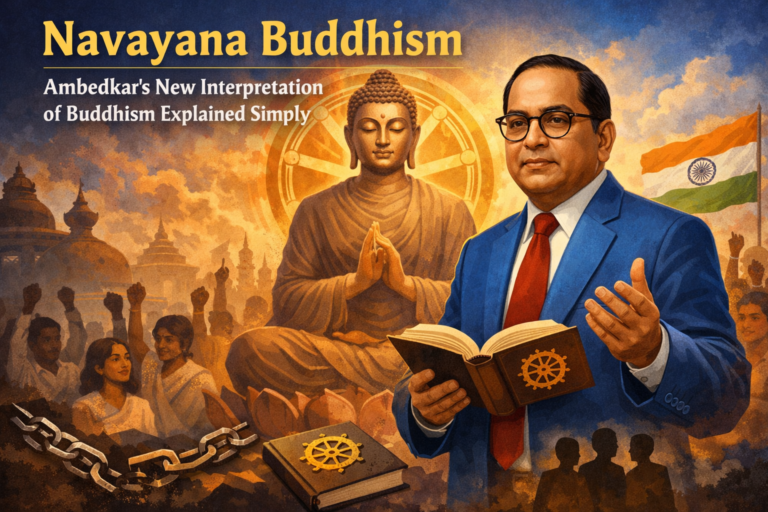
In October 1956, in a historic ceremony in Nagpur, he converted to Buddhism along with thousands of followers. It wasn’t just about religion — it was about choosing a path that aligned with equality, dignity, and rational thinking. This led to what we now call Navayana Buddhism.
Today, Navayana Buddhism has tens of millions of followers across India. In 2026, this movement continues to offer millions of Dalits a framework of self-respect, community solidarity, and philosophical liberation that transcends caste entirely. It is Ambedkar’s most intimate revolution — the one he fought for the human soul itself.
People Also Ask
What is the relevance of Dr. Ambedkar in 2026?
In 2026, Ambedkar’s relevance is immense. The Constitution protects the rights of every Indian citizen. His reservation framework continues to provide access to education and employment for millions of marginalised Indians. His advocacy for women’s rights forms the bedrock of India’s gender equality laws. And his call to “Educate, Agitate, Organise” remains the most powerful roadmap for social change.
How did Ambedkar change Indian society?
Ambedkar changed Indian society by drafting a Constitution that legally abolished untouchability and guaranteed fundamental rights to all citizens. He established reservation policies for SC/ST communities, championed women’s rights through the Hindu Code Bill, and launched mass movements for access to public spaces. He also led the conversion of millions to Buddhism, creating a new social and spiritual identity for Dalit communities.
Why is Ambedkar called the Father of the Indian Constitution?
Ambedkar is called the Father of the Indian Constitution because he chaired the Constitution’s Drafting Committee and played the principal role in its writing. He ensured that foundational values like equality, liberty, fraternity, and justice were not just aspirational words but legally enforceable rights for every Indian citizen — especially the most marginalised.
What did Ambedkar say about education?
Ambedkar described education as the “milk of a lioness.” His most famous motto — “Educate, Agitate, Organise” — placed education as the first and most essential step toward liberation. He believed that without education, oppressed communities could never break the cycle of discrimination and poverty. He personally established schools and hostel facilities for Dalit girls, translating his belief into action.
How is Ambedkar remembered internationally?
Internationally, Ambedkar is recognised as a global icon of human rights. The United Nations has acknowledged his contributions to equality and human dignity. Columbia University, where he studied, honours his legacy. His works on caste, democracy, and social justice are studied in universities worldwide. In 2026, his 135th birth anniversary is observed not just across India but in countries with significant Indian diaspora communities.
What is Navayana Buddhism, and why did Ambedkar choose it?
Navayana Buddhism is a modern interpretation of Buddhism that Ambedkar developed and embraced in 1956, rejecting rituals and superstitions while emphasising social equality, reason, and human dignity. He chose Buddhism because it was a path rooted in equality, free from caste hierarchy. The conversion alongside thousands of followers was both a personal and political act — a declaration that those who are not given dignity within a system have the right to step outside it.
Are We Really Honouring Him — Or Just Garlanding His Statue?
Every April 14, India erupts in celebration. Statues are garlanded. Speeches are made. Social media is filled with blue and white posts. And then — for most — life goes back to normal. Caste discrimination continues in villages. Dalit women continue to face double oppression. First-generation college students continue to struggle without support systems.
In 2026, Ambedkar Jayanti demands more than rituals. It is a call to build the equitable India he envisioned. For young people today, his message is simple but powerful: don’t accept things as they are if they’re not fair. Question them. Challenge them. Change them.
The truest tribute to Ambedkar is not a garland. It is action. It is a teacher staying late to help a first-generation student understand what an IIT is. It is a company that actually implements its equal opportunity policy. It is a government that funds rural girls’ education rather than just legislating it. It is you — reading this, understanding this, and refusing to look away.
📌 The Ambedkar Impact Today 2026 is not a museum piece. It is alive in every courtroom that upholds Article 17. It is alive in every scholarship given to a Dalit student. It is alive in every woman who knows she has legal recourse against workplace discrimination. The question is whether it will be alive in the choices we make tomorrow.
His 3 Words That Could Change Your Life Right Now
Educate yourself — not just for a degree, but for awareness. Read Ambedkar’s own words. His “Annihilation of Caste” is not a history book. It is a mirror held up to modern India. His speeches on democracy warn us of exactly the political failures we are witnessing today, seven decades later.
Agitate — not with violence, but with voice. Speak up when you see injustice. Use the very rights Ambedkar wrote into law. File that complaint. Vote. Engage. Demand accountability from institutions. He didn’t win rights for you so they could gather dust.
Organise — build community. The most powerful thing marginalised people can do, Ambedkar knew, was to stop suffering alone and start acting collectively. His vision for economic and social reforms was rooted in the belief that political democracy must be accompanied by social and economic democracy. That vision is still waiting to be fully realised.
Conclusion: His Work Isn’t History. It’s Right Now.
When people ask about Ambedkar’s impact today in 2026, they sometimes expect an answer wrapped in the past tense. They expect a historical summary. But the truth is — his impact lives in the present continuous. It is happening. Right now.
It lives in the Dalit teenager in Bihar who just got a government scholarship. In the woman in Tamil Nadu who filed a domestic violence case and won. In the law that prevents a landlord from refusing to rent to someone based on their caste. In the ballot you will cast in the next election, that ballot exists because of Article 326, which Ambedkar ensured was in the Constitution.
In 2026, his ideas will remain just as vital as they were in the past. Our society continues its endeavour to advance toward equality and justice — and in this context, his ideals illuminate the right path.
He was a man who society tried to erase — and instead, he wrote himself into every corner of its foundation. One hundred and thirty-five years on, the man they tried to silence is still speaking. The question is whether we are listening.
Jai Bhim.
Share This. Because His Ideas Deserve More Than One Day a Year.
If this article moved you, educated you, or made you see your own rights differently — share it. The best way to honour Babasaheb is to keep his ideas in circulation. Educate. Agitate. Organise.