
On October 14, 1956, a single ceremony on four acres of land in Nagpur changed the spiritual and social landscape of India forever — and Deekshabhoomi stands today as its living testament.
There are landmarks, and then there are places that carry the weight of history in their very soil. Deekshabhoomi Nagpur belongs to the second category. Must Visit Recognized as an A-Class Tourism and Pilgrimage Site by the Government of Maharashtra, it draws millions of visitors each year — Buddhists, historians, social activists, and curious travelers — all united by the desire to witness where one of modern India’s most transformative moments unfolded.
Whether you are planning your first visit or simply want to understand why this monument matters so profoundly, this comprehensive guide covers everything: the rich history, the architectural grandeur, the cultural significance, and all the practical details you need to plan a meaningful trip.
The History of Deekshabhoomi Nagpur
The name Deekshabhoomi is a fusion of two Sanskrit words: Deeksha (the act of ordaining or initiation) and Bhoomi (ground or land). Together, they translate to “the ground where people received initiation” — an utterly fitting name for what transpired here.
Dr. Ambedkar’s Declaration & The Road to Conversion
The story begins decades before 1956. Dr. Bhimrao Ramji Ambedkar, the principal architect of India’s Constitution and a fierce champion of social equality, had been wrestling with the caste system all his life. In 1935, he made a momentous public declaration: though born a Hindu, he would not die as one. He spent the next two decades studying the world’s major religions before concluding that Buddhism — with its core tenets of equality, compassion, and the rejection of caste — was the path he sought.
14 October 1956: The Historic Conversion
Morning, 14 Oct 1956
Dr. Ambedkar and his wife, Savita, took the oath of the Three Jewels and Five Precepts from the Burmese monk Mahasthavir Chandramani, a senior Buddhist monk from Kushinagar.
Later the same day
Dr. Ambedkar then personally administered the Three Jewels, Five Precepts, and his own 22 Vows — specifically crafted to ensure a complete break from caste-based practices — to the assembled crowd of approximately 400,000–600,000 followers.
The date’s significance
October 14 was Ashoka Vijaya Dashami — the traditional date commemorating Emperor Ashoka’s own conversion to Buddhism. The year 1956 also marked the 2,550th anniversary of Buddhism globally. The symbolism was deliberate and profound.
Why Nagpur?
Ambedkar chose Nagpur specifically because of the city’s historical connection to the ancient ‘Nag’ people, who were among Buddhism’s earliest and most ardent supporters in India.
6 Dec 1956
Dr. Ambedkar passed away — just 53 days after the ceremony. Yet the movement he started continued, with an estimated 15–20 million people converting to Buddhism by March 1959.
18 Dec 2001
The grand Dhamma Chakra Stupa was inaugurated by President K.R. Narayanan, after 23 years of construction that began in July 1978.
Historical First: This mass conversion — the largest single religious conversion at one location in recorded history — was also the catalyst for the revival of Buddhism in India, the very land of its origin.
Why It Matters: Cultural & Religious Significance
Deekshabhoomi is more than a religious monument — it is the birthplace of the Neo-Buddhist movement in India and the first pilgrimage center of Ambedkarite Buddhism. It is held alongside Chaitya Bhoomi in Mumbai as one of only two places of supreme importance in Dr. Ambedkar’s life.
For millions from marginalized communities, the conversion was not merely a change of religion — it was a declaration of dignity, a rejection of centuries of caste-based oppression, and a leap toward self-determination. Deekshabhoomi thus carries an emotional and political resonance that goes far beyond the spiritual. Scholars, civil rights advocates, and students of social history from around the world visit here not just to pray, but to understand and draw inspiration from one of the most peaceful social revolutions in modern human history.
Architectural Marvel: The Dhamma Chakra Stupa
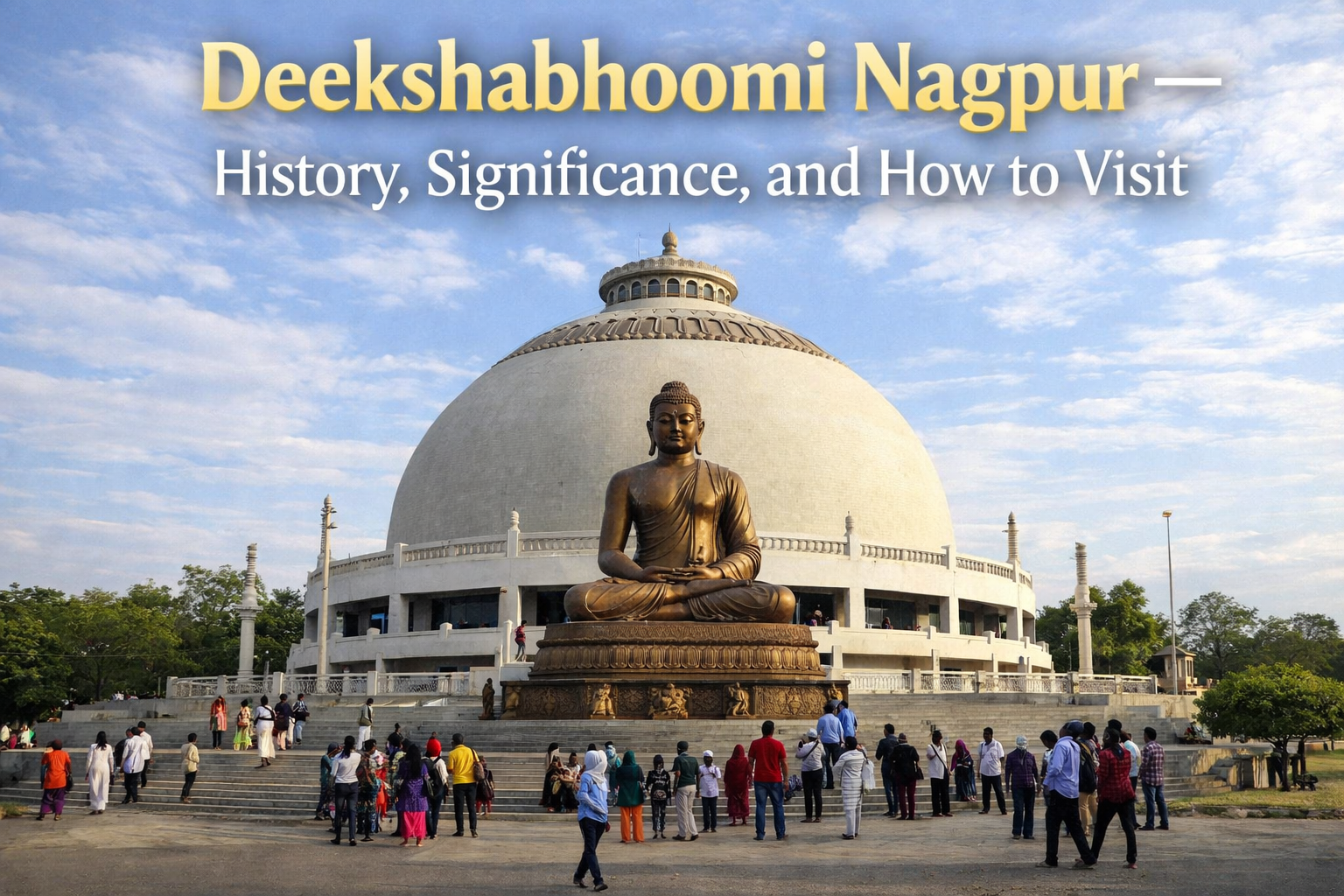
The centrepiece of Deekshabhoomi is the breathtaking Dhamma Chakra Stupa, and it is, by any measure, a remarkable feat of design and engineering.
Design Inspiration
Modelled on the ancient Sanchi Stupa — a UNESCO World Heritage Site — but with a crucial difference: Deekshabhoomi’s stupa is entirely hollow inside.
Record-Breaking Scale
It is the largest hollow Buddhist stupa in the world, with an inner circular hall spanning 4,000 square feet and a ground floor of over 20,000 square feet.
Materials
Built using white marble, granite, and Dholpur sandstone — materials chosen to symbolize purity, strength, and resilience.
Four Gates
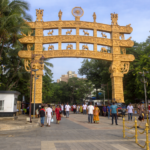
Four ornate entry gates face the cardinal directions, each carved in Rajasthani marble with figures of Dhammachakras, horses, elephants, and lions — echoing the iconography of Sanchi.
Designed by architect Sheo Dan Mal, the two-storey hemispherical structure can accommodate over 5,000 monks on each floor. Above the dome sits a decorative umbrella, a classical Buddhist architectural element. The building’s scale and serenity leave virtually every visitor speechless on first encounter.
What to See Inside & Around the Complex
Deekshabhoomi spans four acres and contains several points of deep interest beyond the stupa itself:
The Meditation Hall
Inside the stupa: a vast, serene meditation space with a large Buddha statue donated by Thai students, and an exhibition on the life of Gautama Buddha and Dr. Ambedkar.
The Sacred Bodhi Tree
On the eastern side stands a sacred fig tree grown from three branches of the original Bodhi Tree at Anuradhapura, Sri Lanka — brought here by Bhadant Anand Kausalyayan.
Library & Bookstall
A dedicated research library with extensive Buddhist and Ambedkarite literature, plus a bustling bookstall at the main entrance with publications from national and local publishers.
Statues & Vihara
A bronze Buddha Vihara, statues of Dr. Ambedkar, a marble column bearing his 22 Vows, and the Preamble to the Indian Constitution inscribed in stone.
Gardens
Lush, well-maintained gardens managed by the Nagpur Improvement Trust surround the stupa — ideal for quiet reflection.
Educational Institutions
The campus also houses Dr. Ambedkar Law College, Dr. Ambedkar Institute of Management Studies, and a Sports Academy — making this a living centre of learning.
Dhamma Chakra Pravartan Din: The Annual Pilgrimage
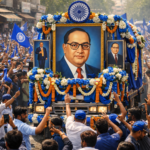
Every year on 14 October, Deekshabhoomi transforms. What is normally a serene monument becomes the focal point of one of India’s largest annual gatherings. Hundreds of thousands — sometimes millions — of devotees from across India and abroad converge here for Dhamma Chakra Pravartan Din to commemorate the historic conversion and reaffirm their commitment to the Buddhist path.
The Babasaheb Ambedkar Deekshabhoomi Smarak Samiti organises the event, supported by local authorities. The festivities include chanting, processions, discourses on Buddhist philosophy, and scores of book stalls set up by national and regional publishers. If you want to experience the site at its most electric and emotionally charged, visiting on or around October 14 is extraordinary — though be prepared for very large crowds and limited parking.
How to Visit Deekshabhoomi: Practical Travel Guide 2026
| Detail | Information |
|---|---|
| Address | S. Ambazari Road, Abhyankar Nagar, Nagpur, Maharashtra 440020 |
| Entry Fee | Free (no ticket required) |
| Opening Hours | Open all day, every day of the year |
| Best Visit Time (day) | Early morning or late evening for peace and good light |
| Best Season | October to March (cooler weather) |
| Peak Crowd Day | October 14 — Dhamma Chakra Pravartan Din |
| By Air | Dr. Babasaheb Ambedkar International Airport — 8 km away |
| By Train | Nagpur Railway Station — 5 km away; auto-rickshaws available |
| By Metro | Rahate Colony Metro Station (approx. 0.92 km) |
| By Road | City buses, autos, taxis; parking on site (fills up at festivals) |
| Nearby Hotels | Radisson Blu Nagpur (3.7 km), The Pride Hotel (3.3 km) |
| Tourism Grade | A-Class by the Government of Maharashtra |
Insider Tips Before You Go
- Dress modestly — shoulders and knees covered. This is a sacred site, not a tourist attraction in the conventional sense.
- Remove your shoes before entering the stupa. Shoe storage stands are provided near the entrance.
- Maintain silence or speak softly within the stupa premises, especially in the meditation hall.
- Photography may be restricted in certain inner areas — watch for signage or ask staff before shooting.
- Visit on a weekday morning to avoid crowds and experience the meditative stillness the site truly offers.
- If you’re visiting on October 14, arrive very early — the site sees massive crowds and parking fills completely.
- Pick up a book on Dr. Ambedkar or Buddhism from the entrance bookstall — the selection is excellent and prices are fair.
- The surrounding Ambazari Lake and Garden (approx. 2 km away) make a lovely complementary half-day outing.
People Also Ask About Deekshabhoomi Nagpur
What is the significance of Deekshabhoomi Nagpur?
Deekshabhoomi is the sacred site where Dr. B.R. Ambedkar and approximately 400,000–600,000 followers embraced Buddhism on 14 October 1956 — the largest single-location mass religious conversion in recorded history. It is the birthplace of the Neo-Buddhist movement in India and the first pilgrimage center of Ambedkarite Buddhism, symbolizing the rejection of caste-based discrimination and the pursuit of equality and dignity.
Is there an entry fee for Deekshabhoomi?
No. Entry to Deekshabhoomi is completely free. The site is open to all visitors, every day of the year, with no tickets required. Facilities, including parking, drinking water, and restrooms, are also available.
What are the best timings to visit Deekshabhoomi?
The site is open all day, year-round. For the most peaceful experience, early morning or late evening visits are recommended. The best season is October through March when Nagpur’s weather is cooler. The most spectacular (but crowded) time to visit is on October 14, Dhamma Chakra Pravartan Din, when millions of devotees gather for the annual commemoration.
Why did Dr. Ambedkar choose Nagpur for the Buddhist conversion ceremony?
Dr. Ambedkar chose Nagpur because of its deep historical connection to the ancient ‘Nag’ people — one of the earliest communities to embrace and propagate Buddhism in India. The date, October 14 (Ashoka Vijaya Dashami), was chosen to coincide with Emperor Ashoka’s own historic conversion to Buddhism, adding powerful historical resonance to the event.
What is special about the Dhamma Chakra Stupa at Deekshabhoomi?
The Dhamma Chakra Stupa is the largest hollow Buddhist stupa in the world. Designed by architect Sheo Dan Mal and inspired by the Sanchi Stupa, it was inaugurated in 2001 after 23 years of construction. Unlike the Sanchi Stupa, it is completely hollow inside, housing a massive meditation hall, a Buddha statue donated by Thai students, and pictorial exhibitions on the lives of Gautama Buddha and Dr. Ambedkar.
How do I get to Deekshabhoomi from Nagpur Railway Station?
Deekshabhoomi is approximately 5 km from Nagpur Railway Station. You can hire an auto-rickshaw or taxi directly to the site (address: S. Ambazari Road, Abhyankar Nagar). The nearest metro station is Rahate Colony, about 0.92 km from the monument. City buses also run frequently on this route.
What is the dress code for visiting Deekshabhoomi?
Modest clothing is required — shoulders and knees should be covered as a mark of respect for the sacred nature of the site. Shoes must be removed before entering the stupa, and visitors are expected to maintain silence or speak quietly inside the premises. Photography inside the inner sanctum may be restricted.
Final Thoughts: Why Deekshabhoomi Deserves Your Visit
To visit Deekshabhoomi is to stand at the intersection of history, architecture, spirituality, and social justice. There are a few places in India — or the world — where a single location carries such layered meaning. Whether you come as a devoted pilgrim, a student of history, an architecture enthusiast, or simply a traveler searching for places that genuinely move you, Deekshabhoomi will not disappoint.
The site is free to enter, open every day, easily accessible from the centre of Nagpur, and rich with things to see and understand. It asks only that you come with respect, curiosity, and a willingness to let history speak. That, in the end, is the very spirit Dr. Ambedkar wished to awaken in everyone who encountered his ideas — and this sacred ground carries that spirit still.
Researched & Written by a Travel & Heritage Content Specialist
This article was researched using verified sources, including Wikipedia, official tourism records, the Audiala travel guide, Outlook Traveller, and the Nagpur Tourism Board. All facts about visiting hours, facilities, and historical events have been cross-checked across multiple authoritative references. Last updated April 2026.
Sources: Wikipedia · Outlook Traveller · Audiala.com · NagpurHousing.com · TravelSetu.com · YoMetro · MakeMyTrip · Government of Maharashtra Tourism Records